

A report is given on the 7th International Meeting on La Gomera (Canarian Islands) from 4.-11. March. More than 20 entomologists from four nations met in the Biological Research Station of the Curculio Institute (“Casa Diversa“) in Hermigua. The lectures of the guest speakers from the Canaries and the results of the numerous excursions are presented. Since the publication of the recent La Gomera catalogue on weevils in December 2012 (SNUDEBILLER), 4 additional species were recorded for the first time on La Gomera during this meeting. Habitus and aedeagus photos, distribution maps and finding circumstances of the new species are presented. Now there are 125 valid weevil species known from the island and first descriptions are being prepared for several additional species.
Meeting, Entomologists, Curculio Institute, Curculionoidea, Curculionidae, new records, Spain, Canary Islands, La Gomera
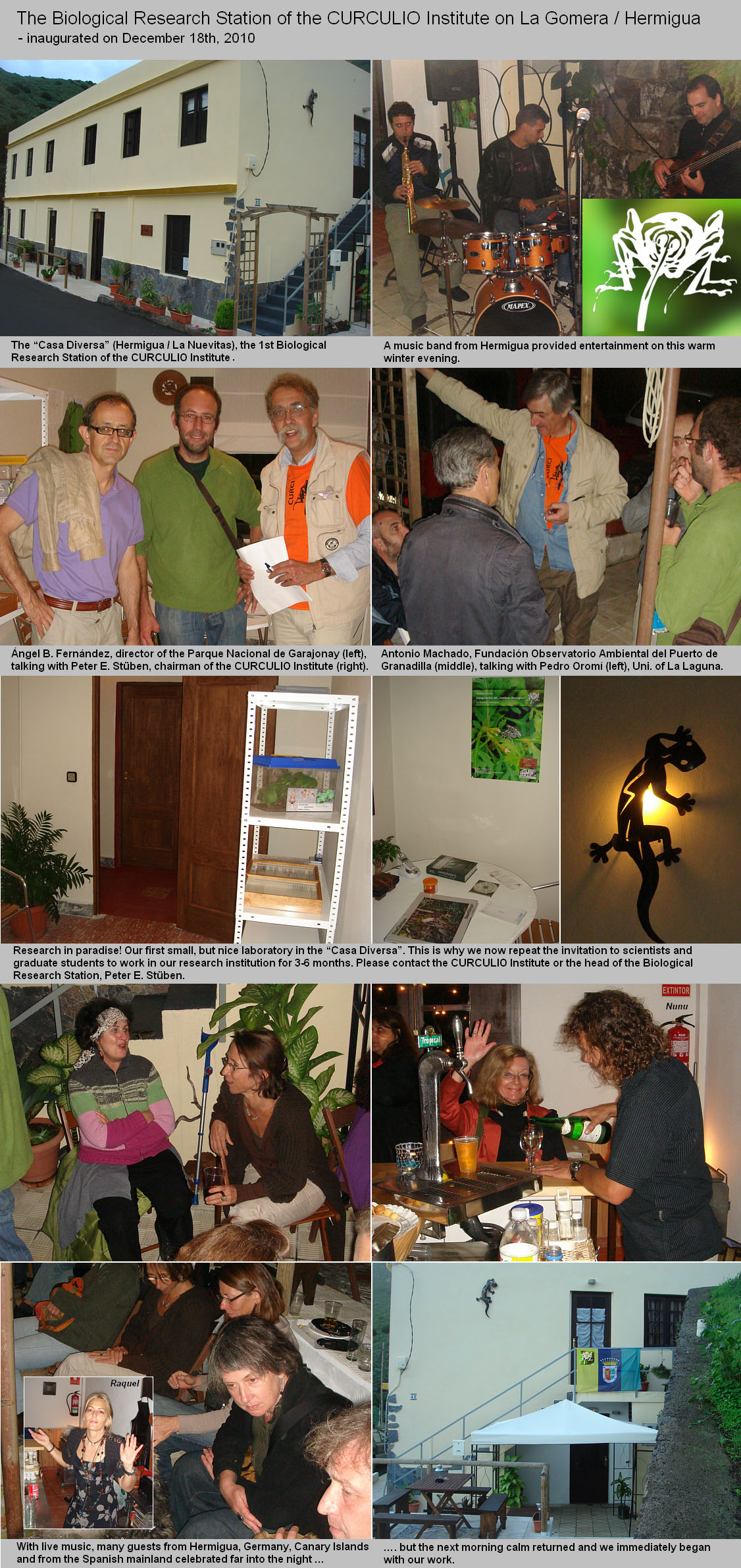
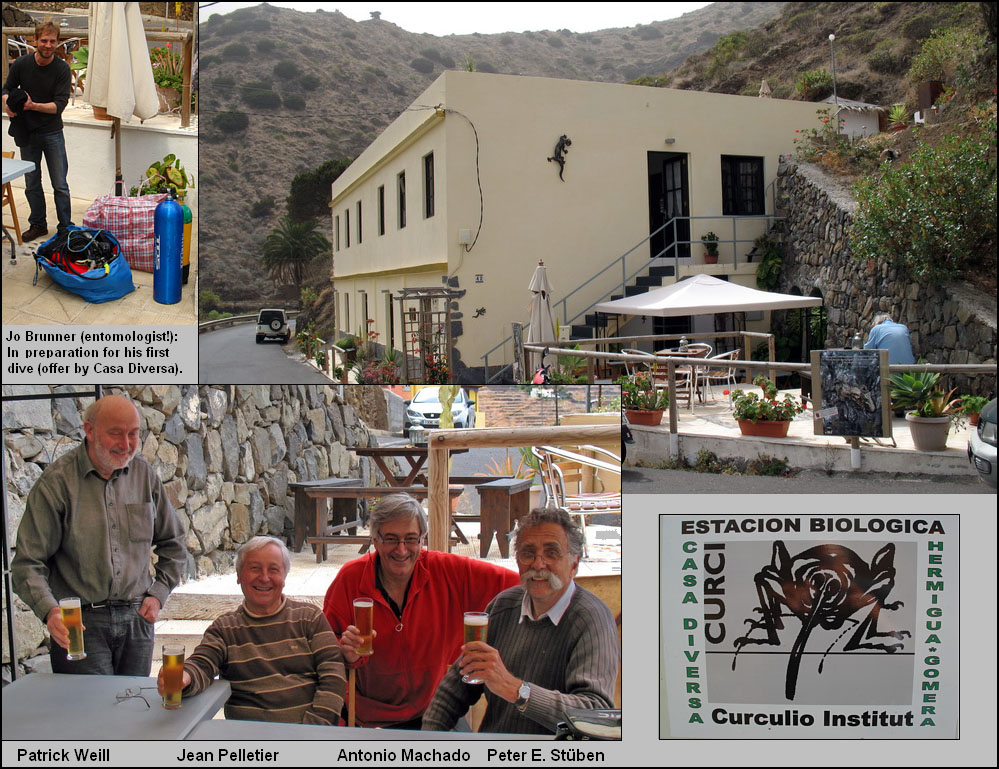
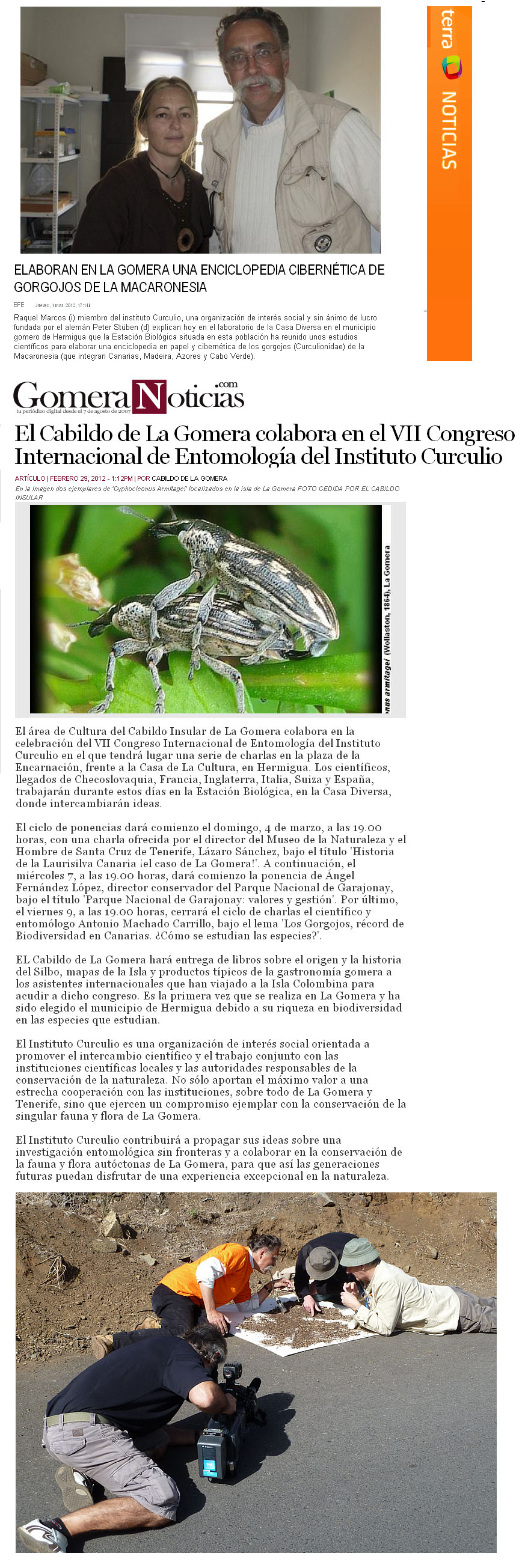
On December 18th, 2010, the Biological Research Station of the CURCULIO Institute on La Gomera was inaugurated – after many months of preparation [Fig. 77.1][Stüben 2011a,b]. Soon after the decision was taken to hold the next (7th) International Meeting of the CURCULIO-Institute at this venue [Fig. 77.2].
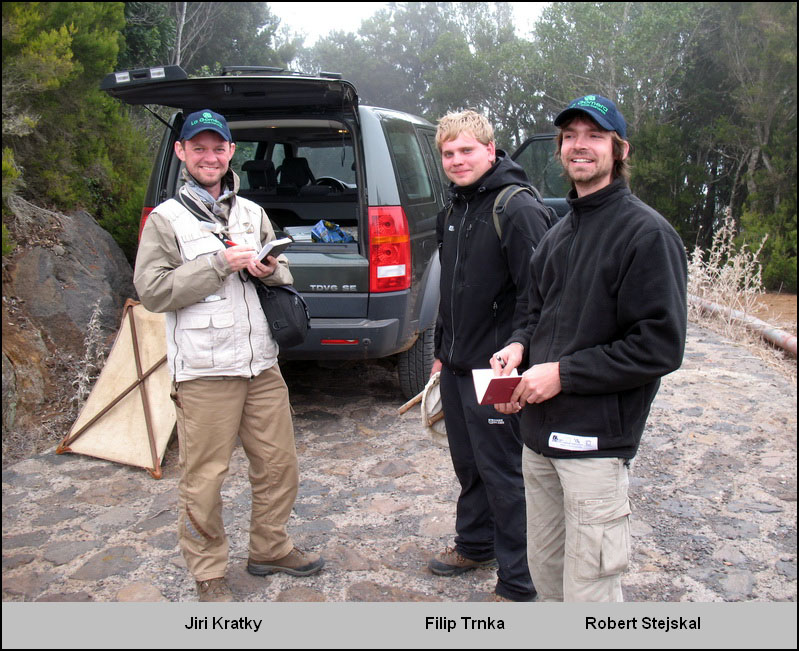
There were some ideal conditions: our own small laboratory and a jeep for excursions [Fig. 77.3], the favourable accommodation facilities in the Casa Diversa of our counterpart in Hermigua (Las Nuevitas) ) [Fig. 77.4] and the Mayoress of Hermigua who was inspired by this idea. The arrangements had already begun in 2010. From the outset we could be sure to receive the support of the Cabildo in La Gomera (San Sebastian) and also the administration of the famous Garajonay National Park. Both institutions issued the necessary authorisations for the collection of Curculionidae on La Gomera, thus ensuring the success of the event held from 4.-11. March 2012 in Hermigua.
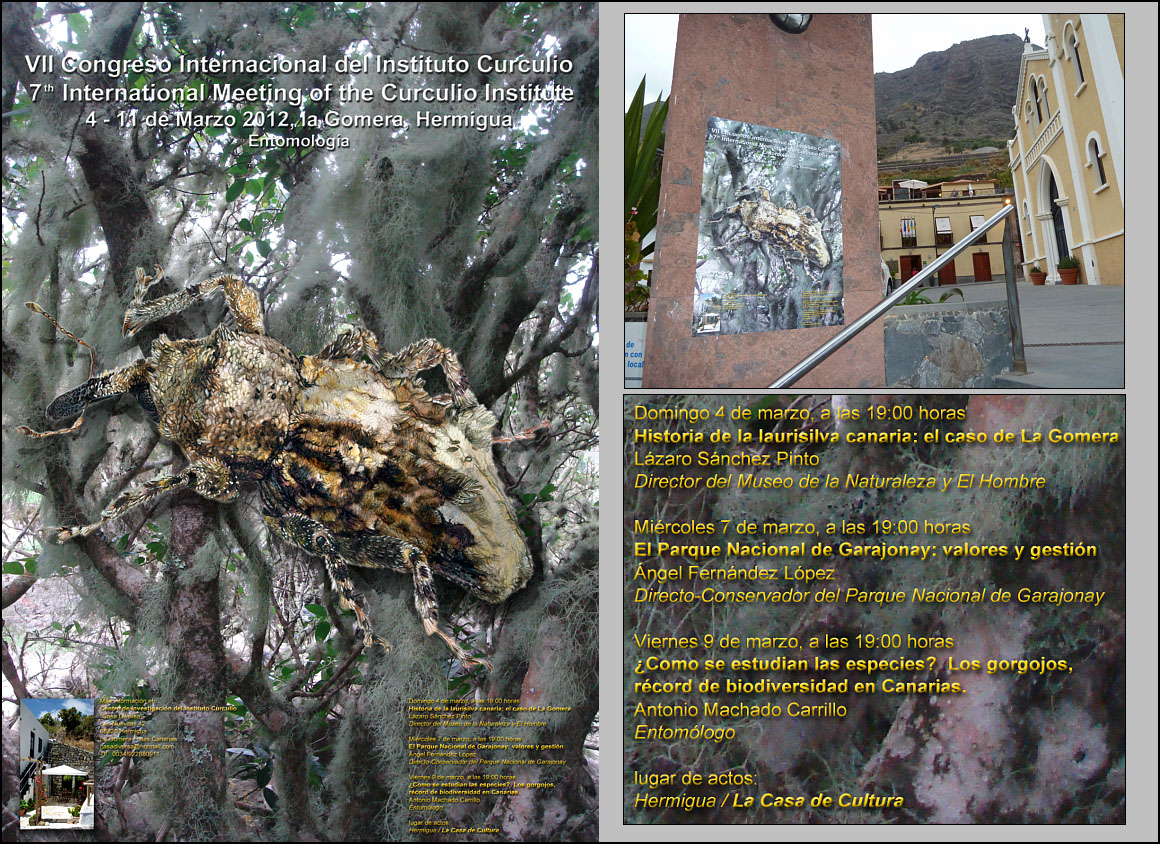
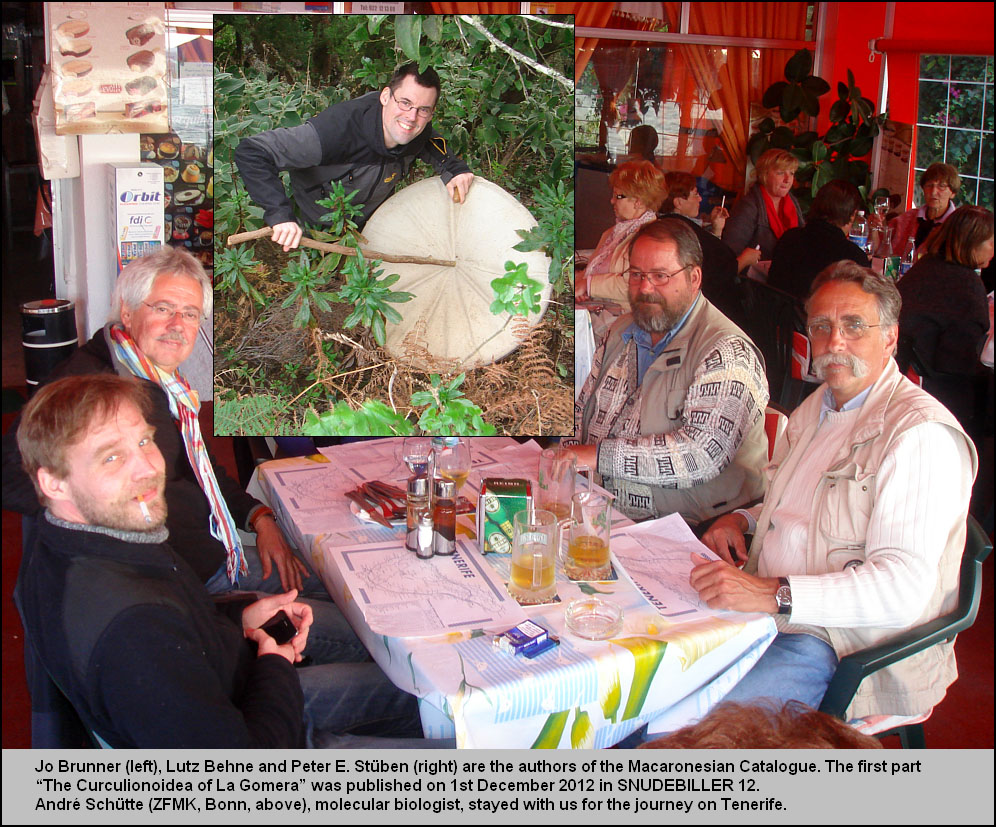
In December 2011, a delegation had arrived prior to the participants, to hang up the posters printed solely for this event throughout La Gomera [Fig. 77.5]. A few days before the opening of the International Meeting the first colleagues from Germany arrived in the beginning of March 2012. For several weeks before they had been collecting weevils in the North of Tenerife for the planned catalogue of Macaronesia. The first part „Die Curculionoidea La Gomeras“ was published on 1. December 2011 on the SNUDEBILLER 12 [Stüben 2012] [Fig. 77.6].
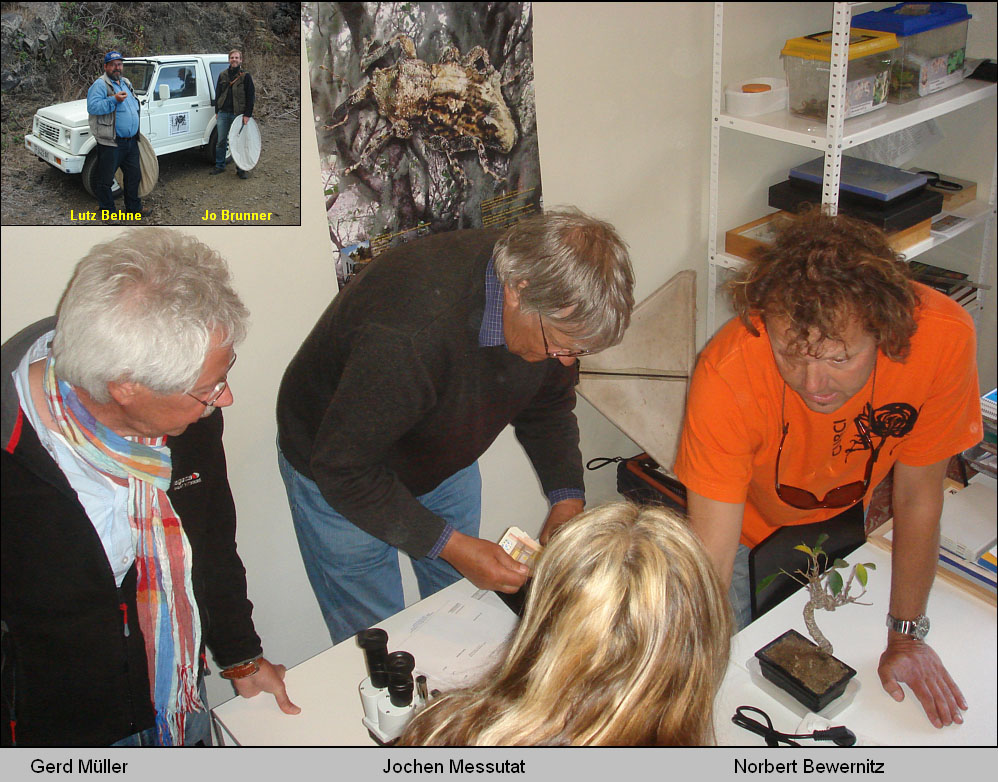
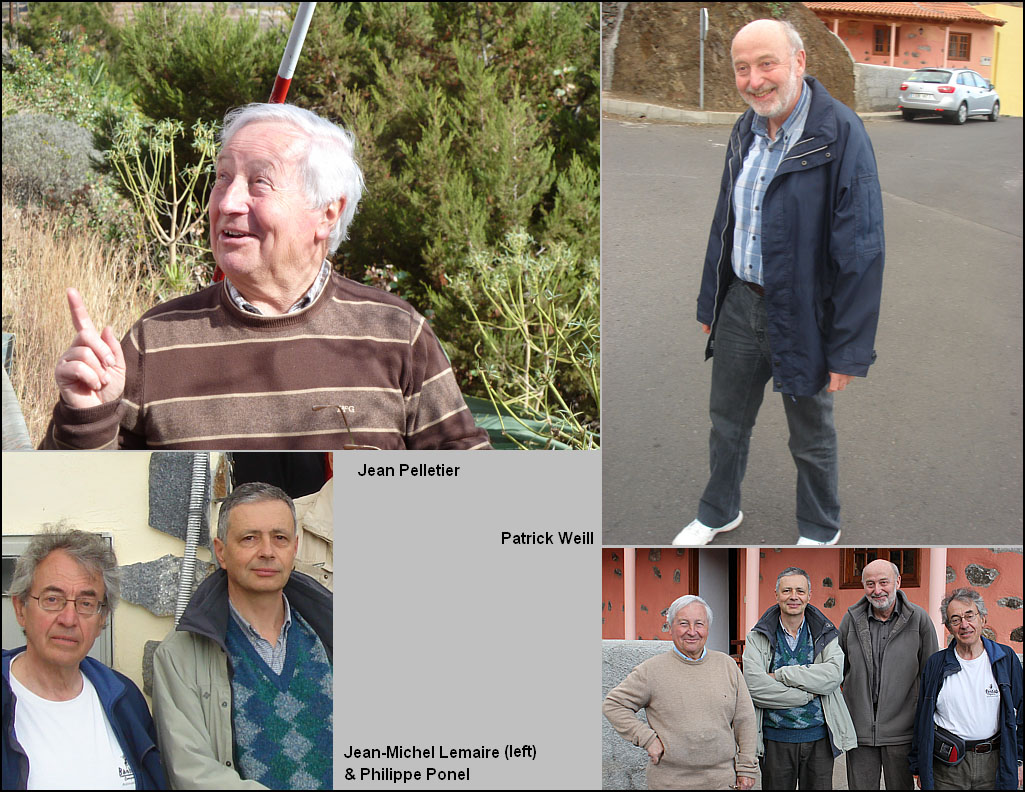
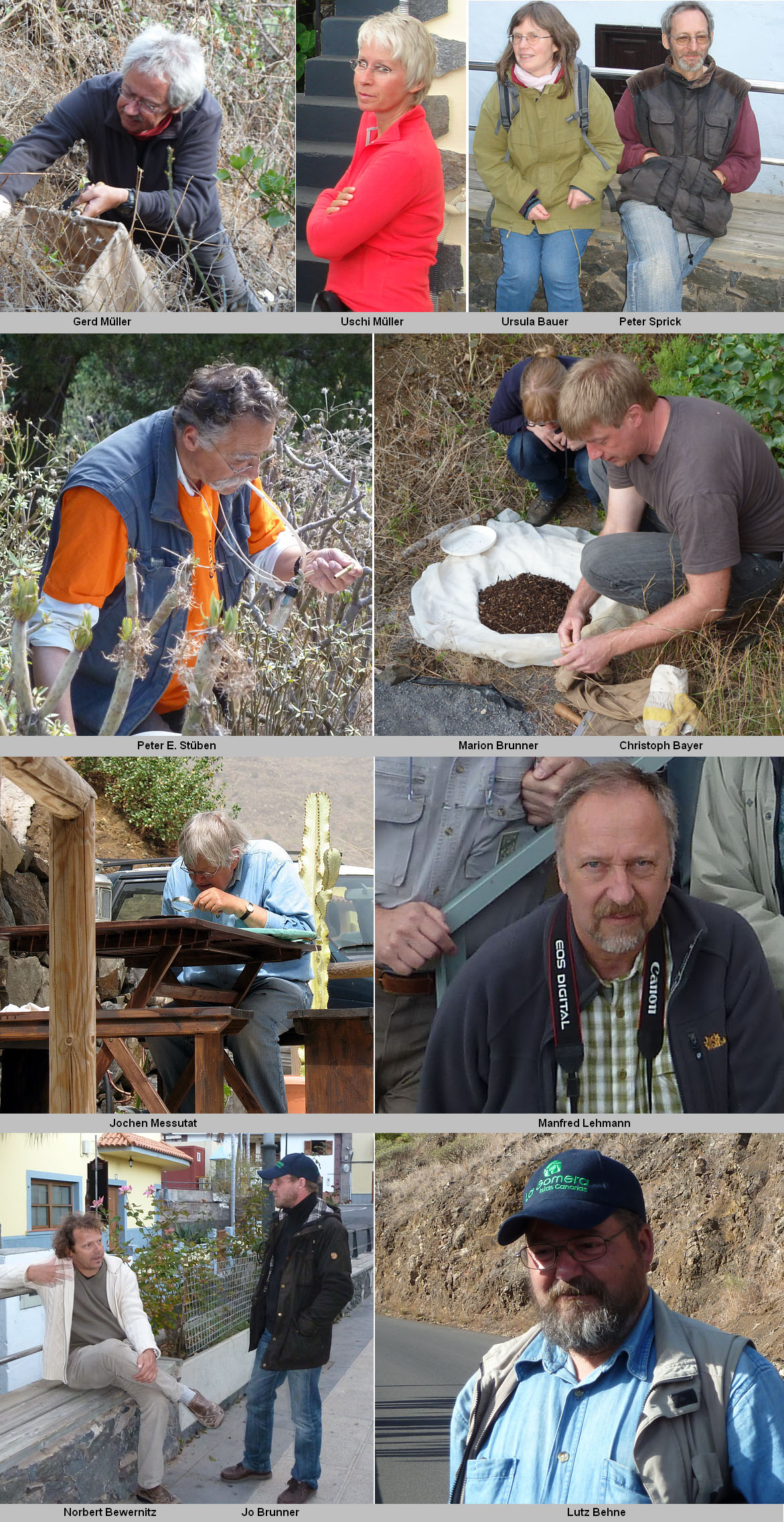
A database, supplemented by 29 first records of species from the island, for La Gomera was available (corrections to the La Gomera catalogue: see appendix 1). The participants who arrived during the next few days from France [Fig. 77.7], Czech Republic [Fig. 77.8], Spain [Fig. 77.9] and Germany [Fig. 77.10] could therefore be provided with essential information on species, localities and finding circumstances. Especially for this purpose, Alexandre Stüben designed a large poster (DIN A-1 format) with all 121 weevil species of La Gomera recorded up to this point in time [Fig. 77.11] (see appendix 2). The provision of this information, and a nearly complete reference collection of all Curculionoidea of La Gomera, gave the invaluable advantage each evening of being able to compare species collected during the event against those of the Biological Research Station with the available microscopes [Fig. 77.12]. Another benefit was the formation of small groups to collect with minimal impact on flora and fauna.
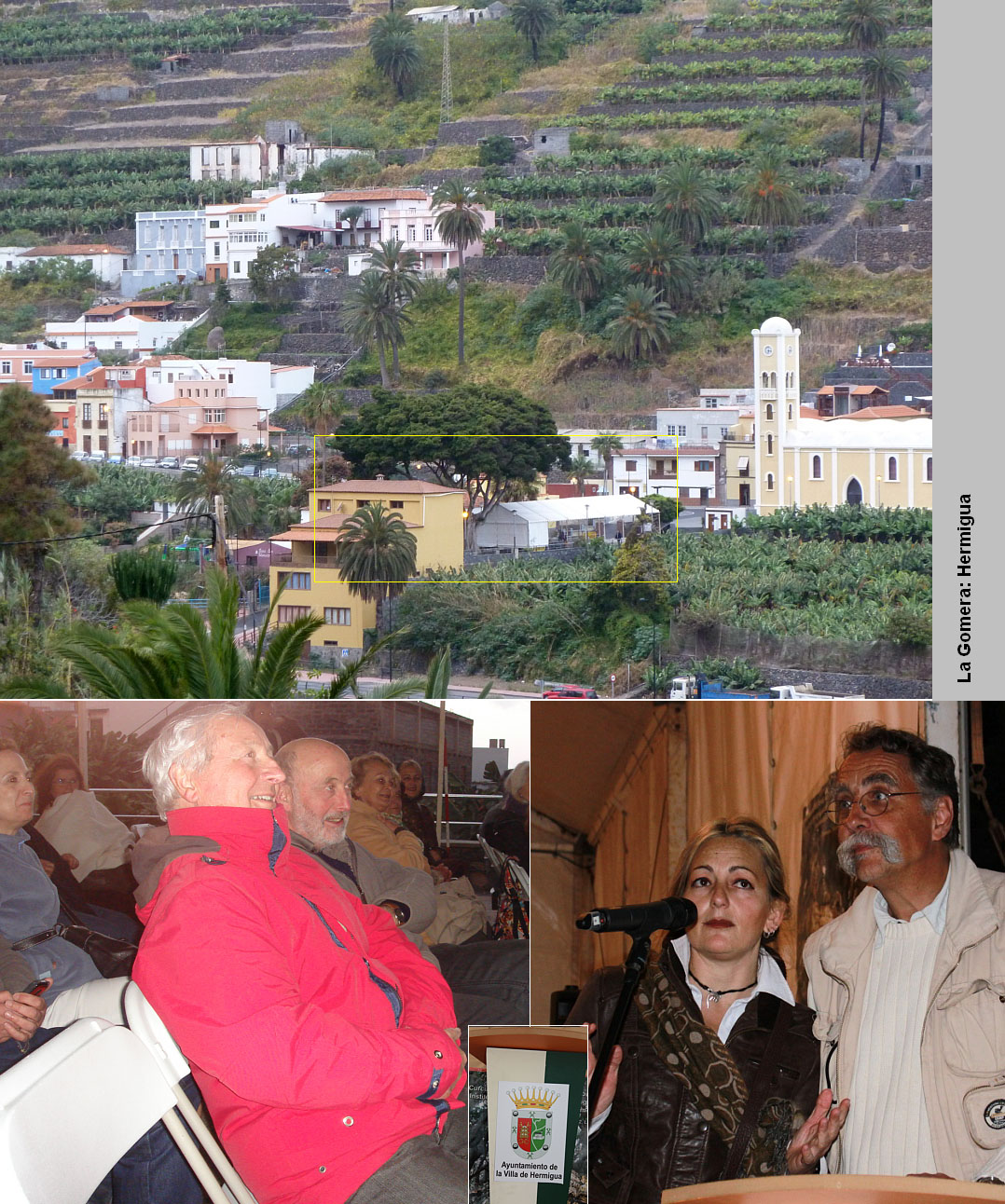
In addition to the collecting activities between 4th and 11th March 2012, central events took place on three evenings in the main square of Hermigua [Fig. 77.13]. A tent with stage, loudspeaker and Beamer was kindly provided by the municipality. The language of the meeting was Spanish, to enable the participation of as many of the local population interested in environment and species protection as possible (occasionally the most important texts were also translated into English or German).
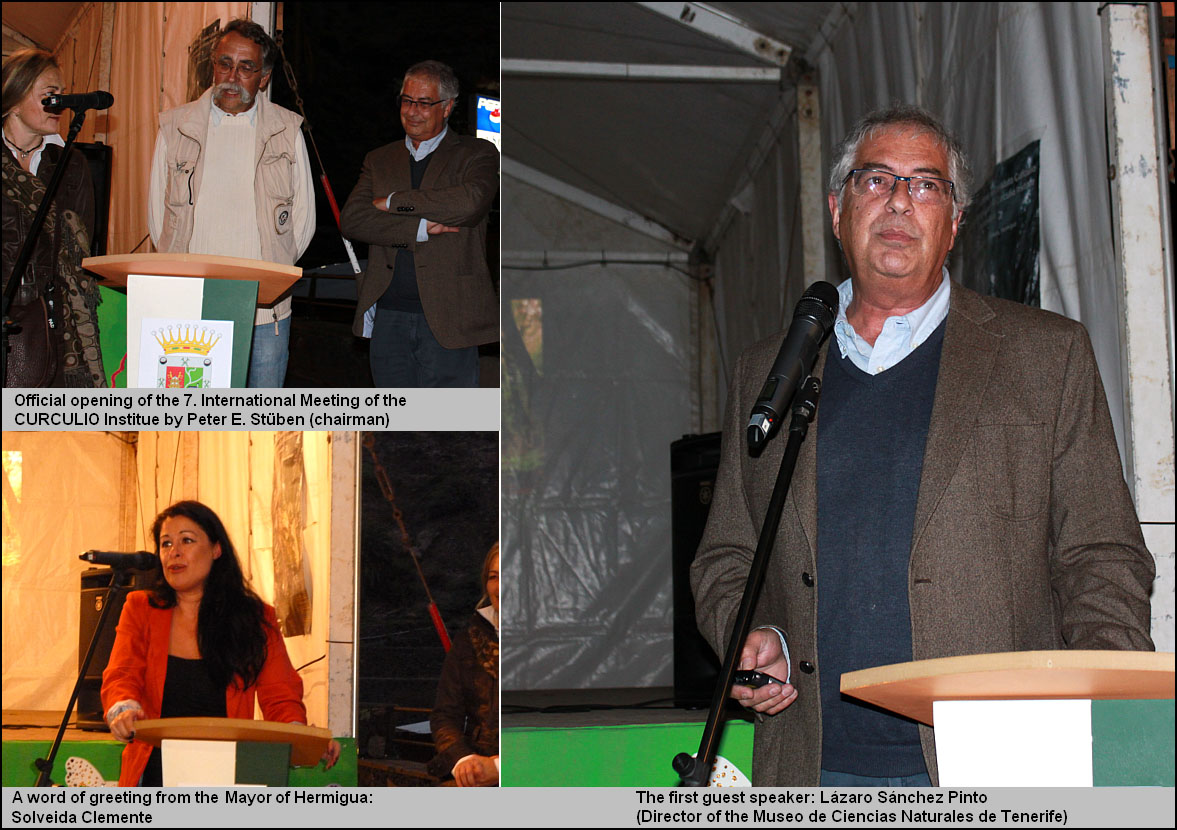
Right after the opening of the 7th International Meeting on 4.11. 2012 by the chairman of the CURCULIO Institute, Peter E. Stüben, and the Mayoress of Hermigua, Solveida Clemente, Lázaro Sánchez-Pinto gave a talk about the: „Historia de la laurisilva canaria: el caso de La Gomera“ [Fig. 77.14]. Here is some of the text of his speech that received high attention:
„Prior to the European conquest of the Canaries (15th Century), the laurel forest or laurisilva covered vast areas of the central and western islands. Shortly after their arrival, the new settlers cleared much areas of this forest for agriculture, and as a source for firewood, charcoal and timber for construction, furniture, tillage tools and many other purposes. During the 16th Century, sugar became the most important export product of the Canaries, and the best soils in the lowlands were devoted to the cultivation of sugar cane. Its production required huge amounts of water and fuel, and both were obtained from the nearby laurel forest. The deforestation was so intensive that many natural springs dried up leading to water supply shortages. The authorities enforced several laws to prohibit logging under severe penalties, including the cutting off the right-hand thumb, but deforestation continued uncontrolled for many decades. Only a few tree stands located near the first settlements escaped this massive deforestation. They were found close to water springs, and many of them still survive today. In fact, the oldest living trees of the laurel forest are currently found in the vicinity of villages and not in remote mountains or deep ravines.
The extension of the laurel forest was further reduced after the 16th Century due to a continuous demand of timber to satisfy the local and export markets. La Gomera was an exception, because it was colonized by Feudal Landlords. They refused to give up their land privileges and preserved the forest as a private hunting reserve, with introduced red deer, wild boars and other game animals. Although feudal rights were abolished at the beginning of the 19th century, and thereafter the island suffered a great deforestation, the laurisilva of La Gomera is still the biggest and best preserved of the Canaries.
Currently, all the ecosystems belonging to the Canary laurel forest are protected by law, but they only cover less than 10% of its original area [Fig. 77.15]. This forest is highly fragmented in all the islands, with the exception of La Gomera. These fragments form a patchy landscape in which the forest remnants are usually very distant from each other. This biogeographical pattern has detrimental conservation implications.“
In the days that followed, these events were repeatedly interrupted by detailed broadcast and TV programmes [TV Canarias]. In the local press the presentations received a lively echo too [Fig. 77.16], as well as information on the field of activities of the CURCULIO Institute on La Gomera. Possibly the most frequently asked question was why the Institute, with more than 100 scientists from all European countries, had selected the small Canarian island of La Gomera as the office of their first Biological Research Station. The answer shall be given here again: no other island of the Canaries has a similarly high biodiversity, and no other place in Europe offers so many protected areas and the Garajonay National Park in such a narrow space with comparatively ideal research conditions like La Gomera. During the last 10 years, 2-3 Curculionidae have been described as new species from La Gomera nearly every year! And last but not least, the short distance into nearly every type of biotope enables comfortable research: from the succulent bush close to the shore to the remnants of the thermophilous coppice forest, up to the evergreen subtropical zones of the Laurisilva.
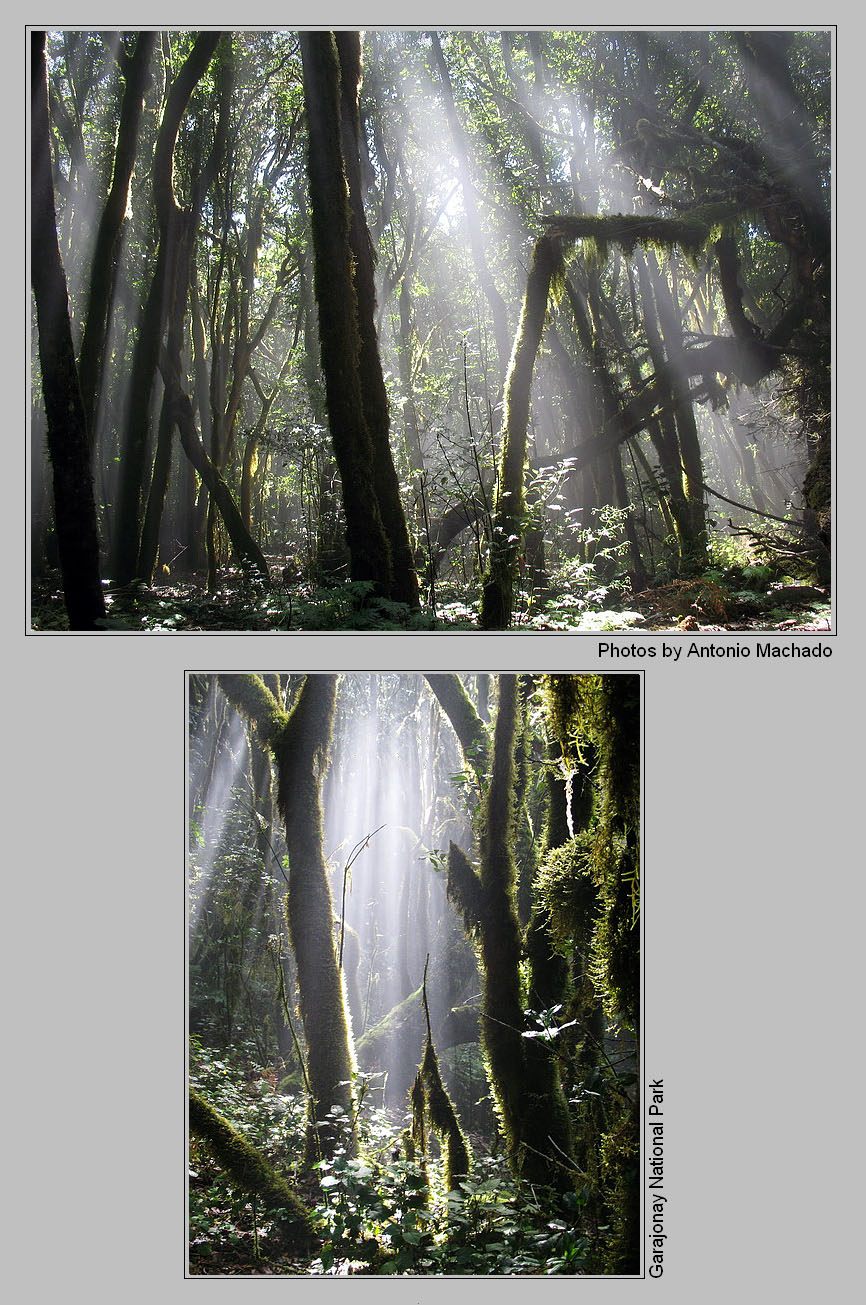
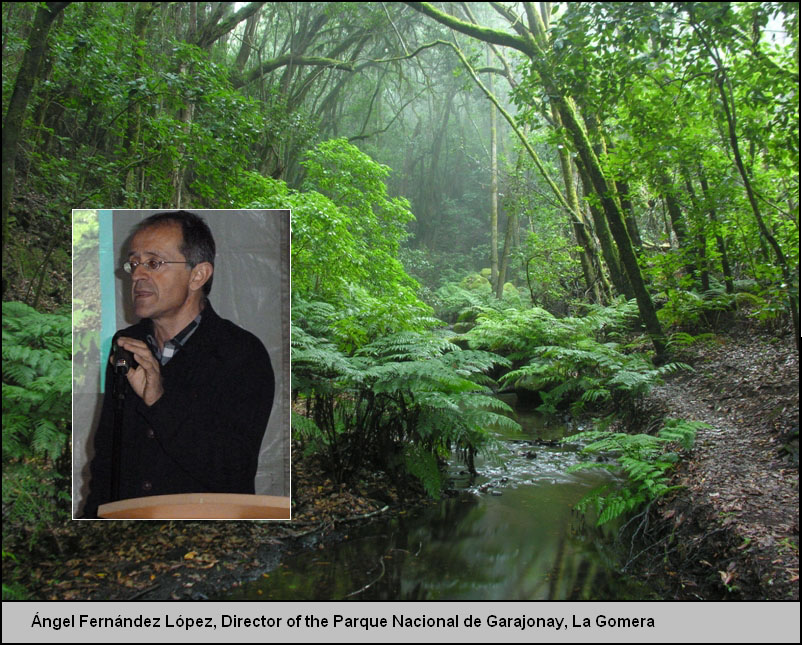
This unique “mythical“ forest [Fig. 77.17] with its mighty trees near “Las Mimbreras“ or “La Mesata“ is not only a focus of attraction for thousands of visitors and nature-lovers; every scientist will be amazed again and again, too [Fig. 77.18] [Stüben et al. 2010]. For the director of the Garajonay National Park, Ángel Fernández López [Fig. 77.19], this was an incentive and challenge to deliver his talk Restoration and Conservation of the forests of La Gomera with the topmost priority. Here are some summarizing thoughts of his talk held on 7. March 2012: „El Parque National de Garajonay: valores y gestíon“.
„At a short distance from the Saharan desert coast, along the summits of the Canary island of La Gomera, is found one of the most singular forests of Spain, the Garajonay National Park, listed as a World Heritage Site by UNESCO in the Natural Category. The persistent clouds and fog that frequently cover these mountains favour the survival of these ancient and splendid subtropical forests, known under the name of Canary Laurisilva or Canary laurel forest. This ecosystem is a relic from the Tertiary Age, extinct in the continent because of the climatic changes that occurred in the Quaternary. It is a natural refuge with an extraordinary number of endemic and endangered species. Nowadays, Garajonay National Park, with almost 4000 ha, is the best preserved remnant of this ecosystem.
The main aims of the management plan are:
Implementation of a management model based on a non intervention approach, to allow ecosystem naturalization. The monitoring program that is being implemented shows important changes in the composition and structure of the forest. This experience is of high interest, a real reference in forest naturalization processes.
Implementation of an important ecological restoration program in the degraded areas of the Park, affected by plantations of alien fast growth commercial forest species introduced in the 1960s, which initially covered about 15% of the Park [Fig. 77.20]. This successful program has, as a main aim, the restoration of the native forest, with 80% of its objectives archieved so far. This program is a reference point in ecological restoration in Spain.
The conservation of endangered flora is one of the main challenges for the Park management because of the high number of taxa included in the Red Lists. At the present moment the Park is working with about 20 endangered species, and 11 recovery plans are already available. These programs have served to improve the situation of many populations and are considered a pioneer experience in Spain since they began to be implemented in the eighties.“
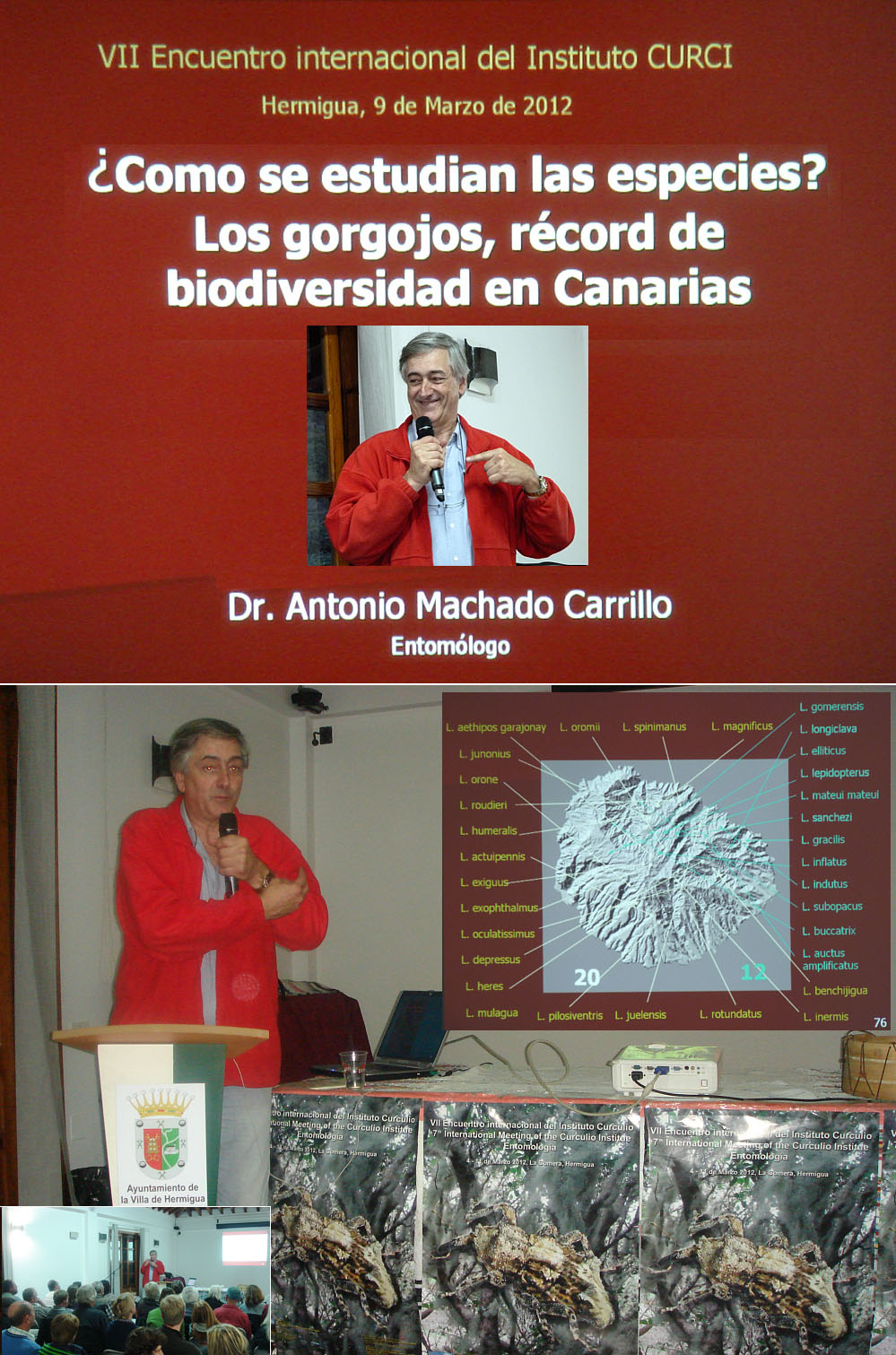
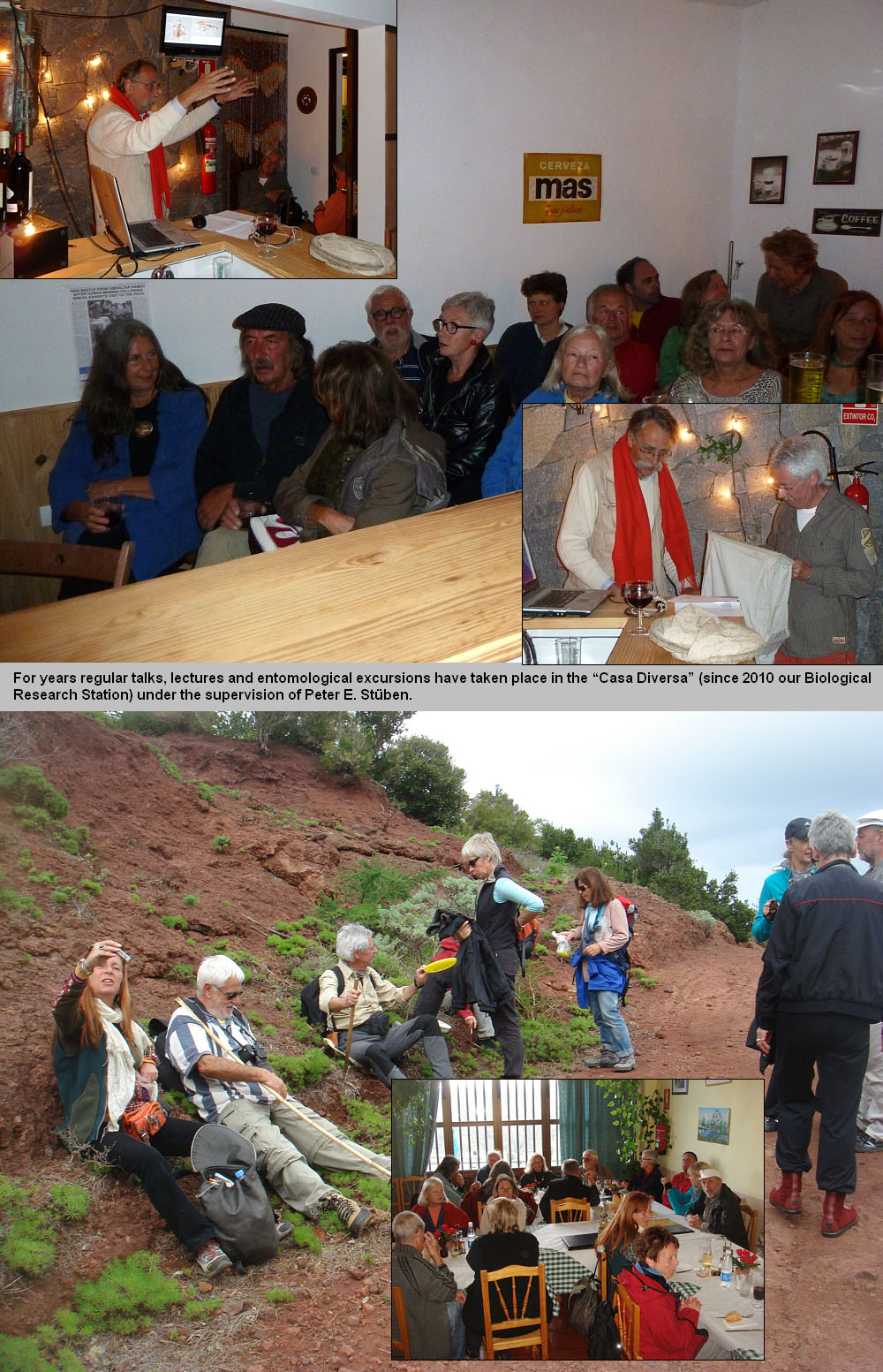
Entomology always has a very personal aspect and it often has something to do with passion and – as in the present case – infectious enthusiasm. In a few years Antonio Machado Carillo (Tenerife) raised the number of Laparocerus species from 130 taxa up to nearly 200 taxa - with no end is in sight. His talk „Como se estudian las especies? Los gorgojos, récord de biodiversidad en Canarias“ (9. March 2012) will remain unforgotten like the many joint excursions. We became nocturnal entomologists in the search for nocturnal insects on the Canaries [Fig. 77.21]. And since it was so enjoyable [Fig. 77.22], I asked him to explain again his motives, specifically for this report, for dedicating himself fully to the Laparocerus:
„Why Laparocerus?
by A. Machado
In 1992, I concluded a fifteen-year extensive study of the ground-beetle fauna of the Canary Islands. Obviously, my interest in beetles and island evolution was not exhausted, but spurred on. Thus, I looked for another group of insects where speciation and eventual evolution patterns could be studied in more depth and coherently. I designed the profile of the ideal candidate: preferably a species-rich genus, with all species being flightless, present in as many islands and habitats as possible, and the whole set be monophyletic. No doubt, oceanic islands would be the place to look for it.
A few candidates were available (Tarphius, Cardiophorus, Hegeter, etc.) but Laparocerus was clearly the best option. No other genus had so many species ascribed to it, and all of them being endemic to Macaronesia. Some 130 species-level taxa were known from the Azores, Madeira, Selvagens, and the Canaries, plus one species from the Macaronesian enclave in North Africa. Each island, inhabited by several species ─ mostly monoinsular endemics ─, represents a repeated evolutionary experiment of nature. Just perfect! The problem: Laparocerus were poorly known, not revised taxonomically, extremely variable, and difficult to find in the field; just a potential nightmare that my colleagues termed a masochist endeavour. Conversely, I found them a wonderful challenge!
My first gratification was to find that Laparocerus were rare in collections, but not in nature, at least, during the night [Fig. 77.23]. Being nocturnal, these weevils hide underground during the day and that is why by-catches were so uncommon. At night they come out to feed in hundreds! Needless to say that I became a compulsive nocturnal entomologist, discovering that insect life is much fun when it is dark.
I initiated a strategic field prospection throughout all Macaronesia, a complete taxonomic revision and a phylogenetic study based on mitochondrial DNA data. My professional duties did not allow me to dedicate myself full time to the Laparocerus study, but after thirteen years of spattered dedication and over 30.000 specimens studied, the overall picture is getting sharper. Laparocerus species have increased to nearly 200 taxa, an absolute record of biodiversity in Macaronesia. I established several synonyms and some important changes have been fixed or are still in the pipeline. Species from the Azores, for instance, belong to a different independent genus; others, like those included in the genus Lichenophagus, Anillobius or Cyphoscelis, are Laparocerus. The Madeira and Afro-Canarian clades are both monophyletic, and it is not yet clear to me if all the subclades (several subgenera) have formed within the archipelagos or split originally in Africa before their invasion took place. I hope to be able to tune up the molecular clock specifically for this group in this region, and solve that question. The divergence in forms is astonishing and the many cases involved will allow the use of statistics to reveal hidden patterns.
My aim with this study is to establish the basis for future spatial evolutionary studies, and if I would be a politician, I would promise that Laparocerus will take Darwin finches out of the podium.”
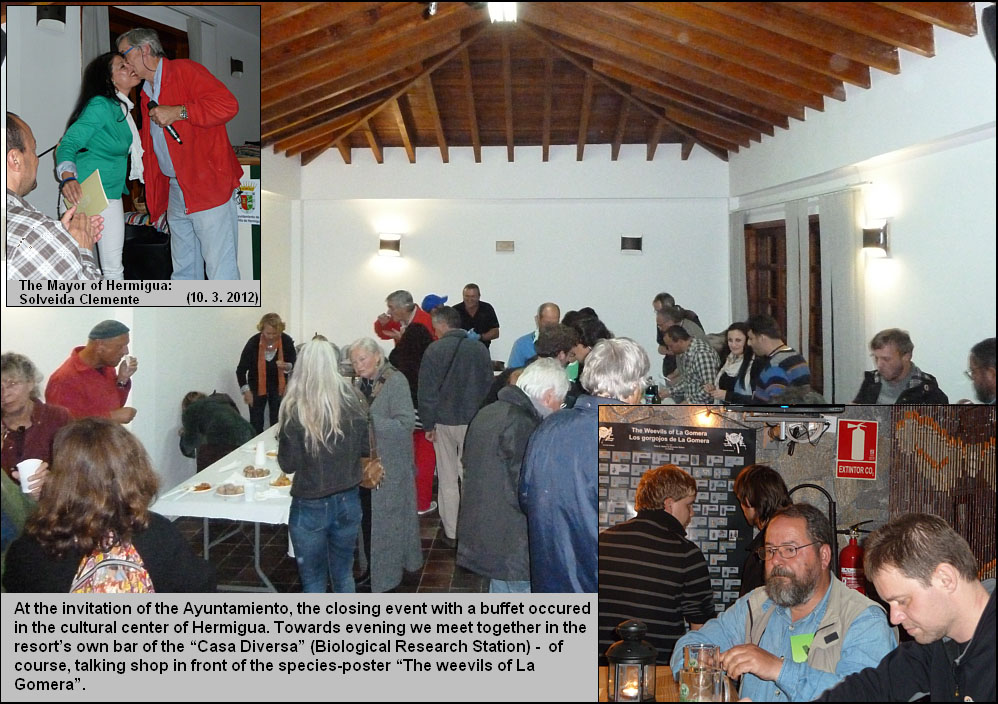
A further highlight was the invitation of the Ayuntamiento to the participants of the CURCULIO Meeting and to many interested persons from Hermigua on 9. March 2012 for a warm buffet. The Cabildo of La Gomera contributed the highly regarded Garajonay vine [Fig. 77.24]. The whole board of the CURCULIO Institute and the participants of the meeting want to again kindly thank the administration and policy-makers on La Gomera and in Hermigua for their great interest, open-mindedness, extraordinary hospitality and willingness.
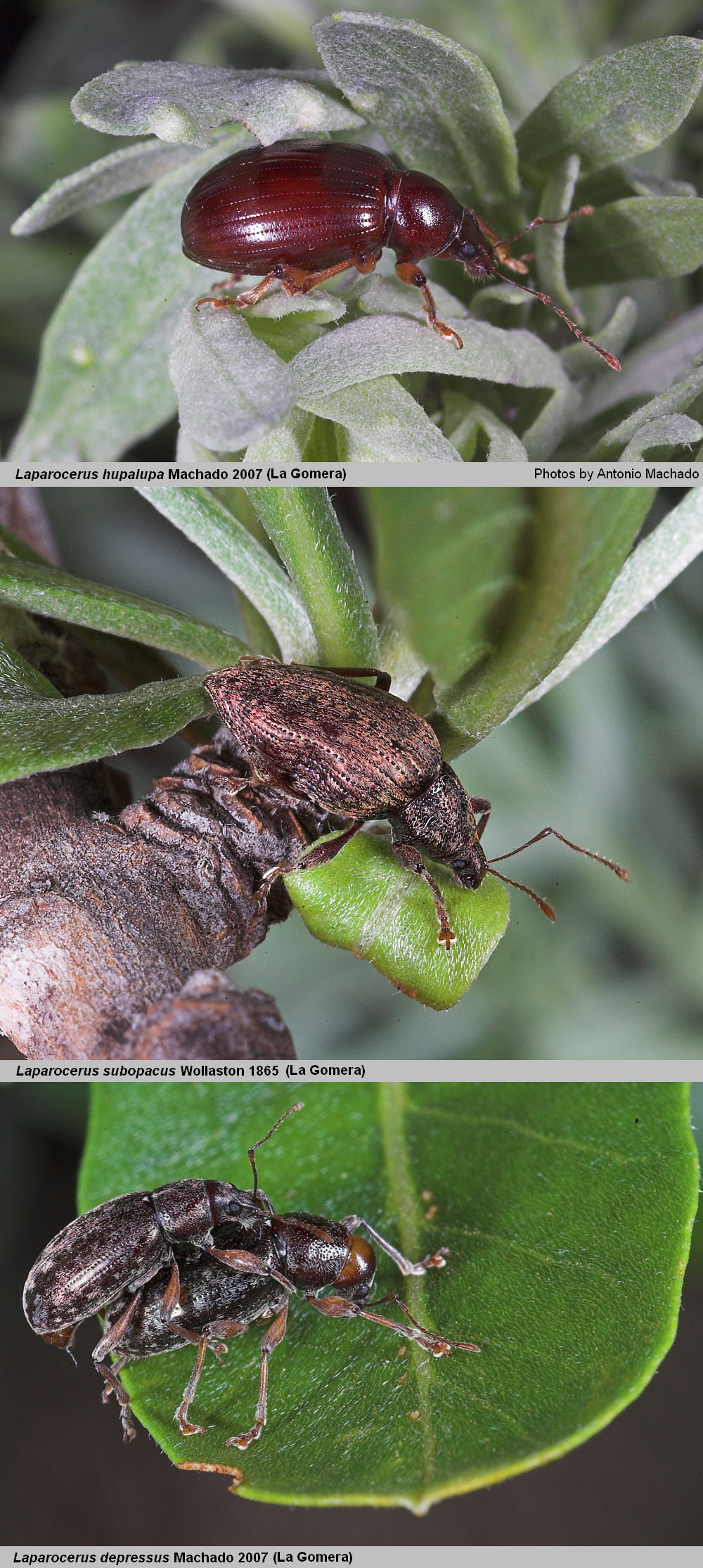
It is truly something special and shows a great sensibility for nature protection and biodiversity conservation on La Gomera, that the school children and their teachers painted Laparocerus hupalupa as a larger-than-life image on their school building in the months afterwards. This species was newly discovered in 2007 on the island. For many years it has been a matter of core principle of the CURCULIO Institute to provide the necessary knowledge to enable people, and especially the young, to recognize the unique nature of their home on La Gomera and to protect this in a sustainable way: Only what people know about will they be able to love and protect! [Fig. 77.26]
And indeed we – scientists and collectors – are repeatedly surprised by the fact that we still do not know many things. Although the climatic conditions were still much too dry on La Gomera at the beginning of March 2012 (there had been most no rain since summer 2011), the numerous excursions during the meeting still revealed some first records and peculiarities for La Gomera (*):
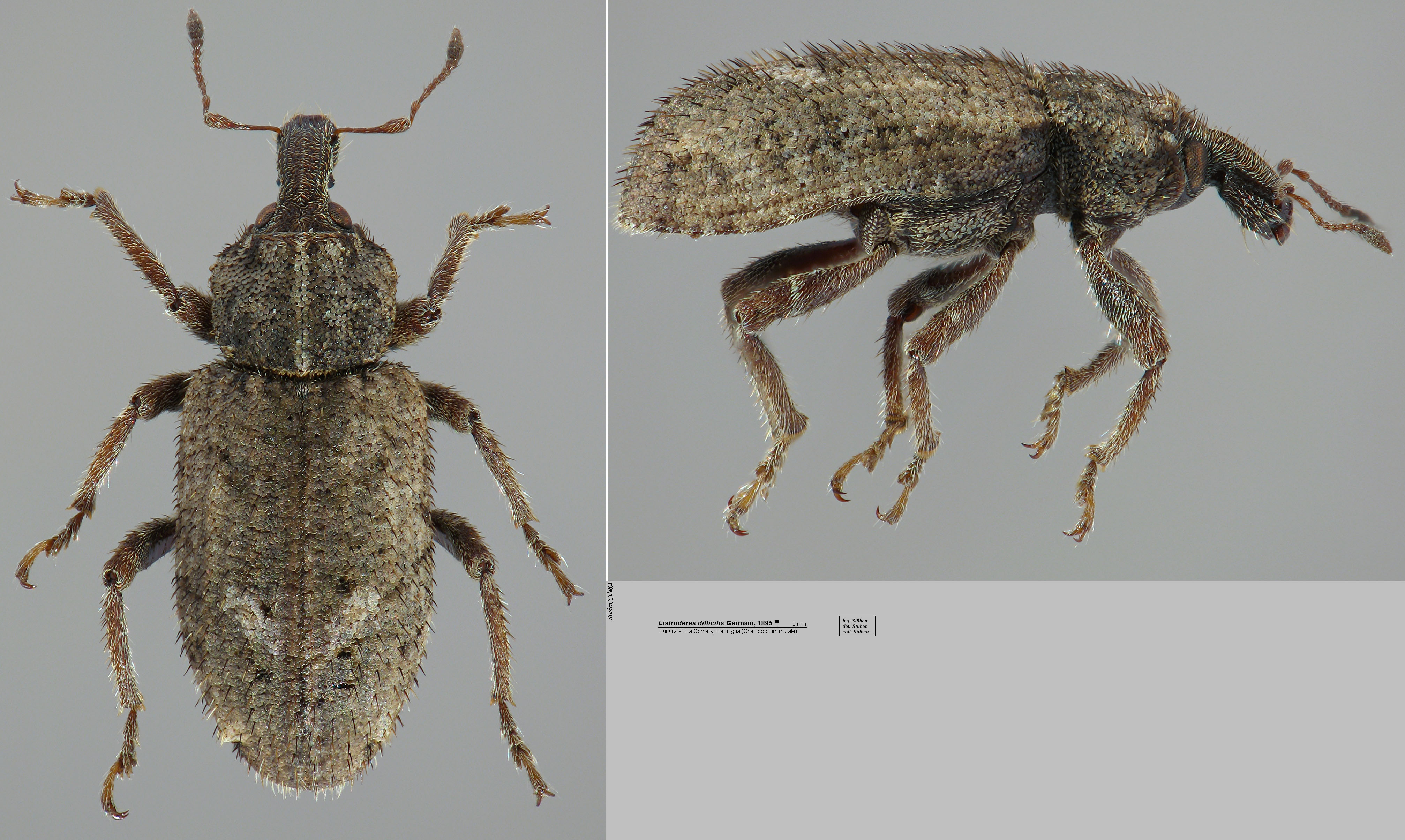
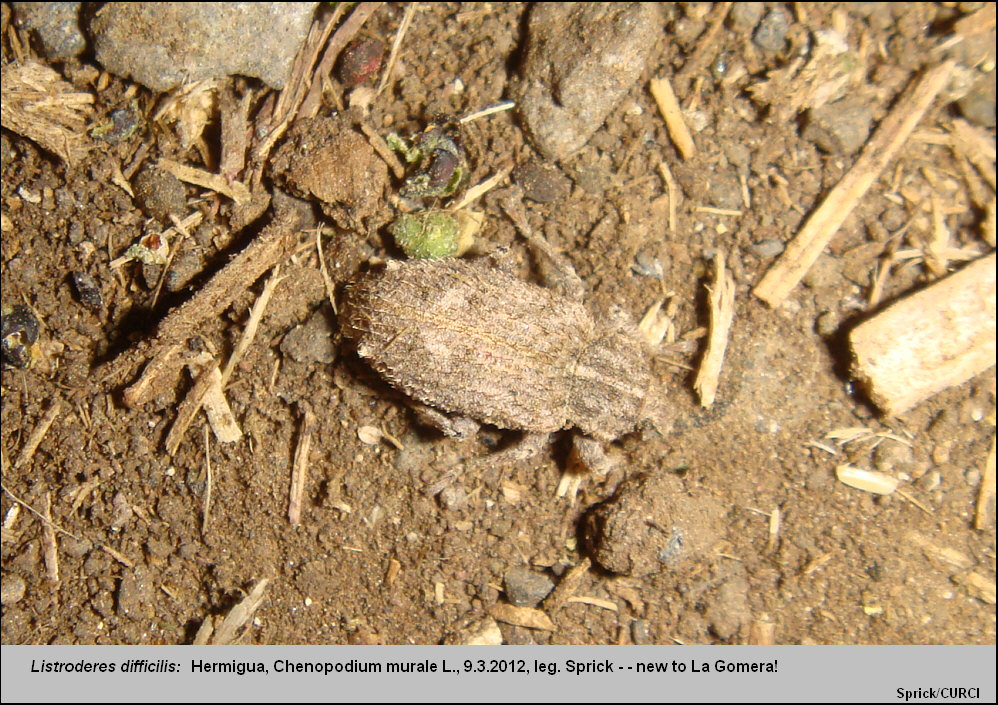
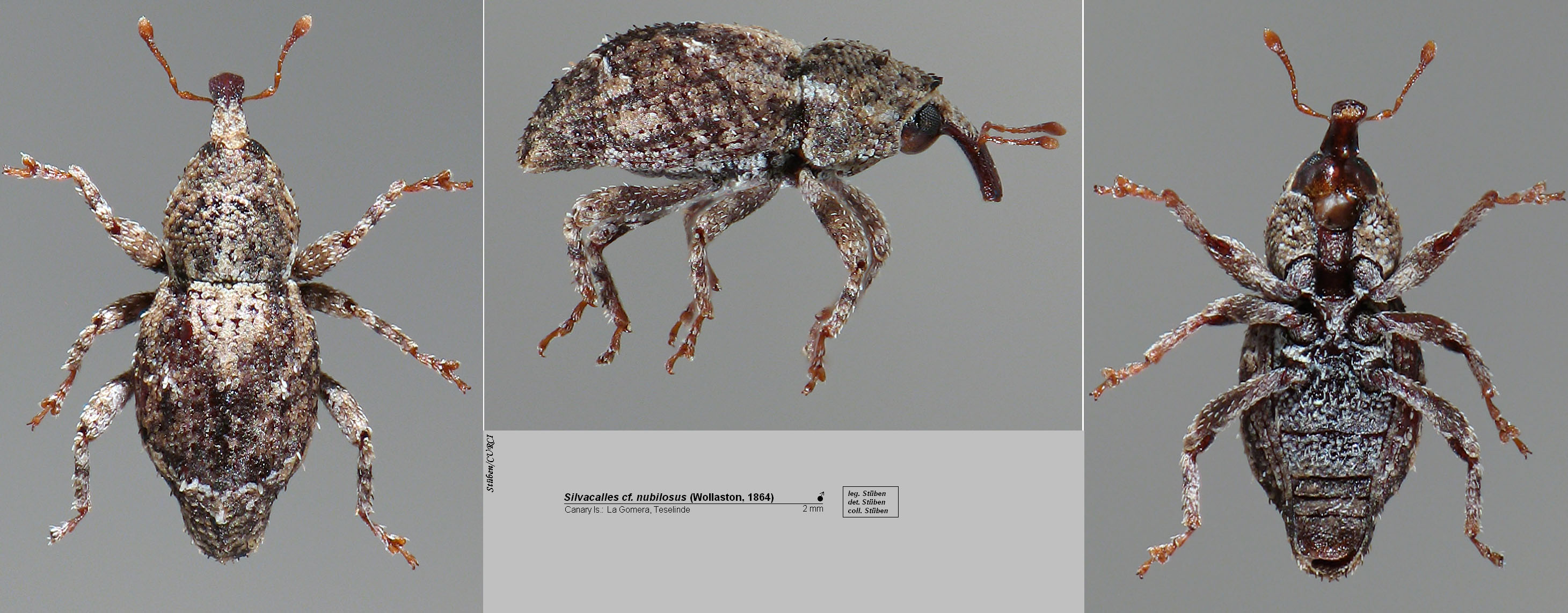
HABITUS: [Fig. 77.27]
CANARIAN ISLANDS (Lista/2009): La Palma - Tenerife - Gran Canaria
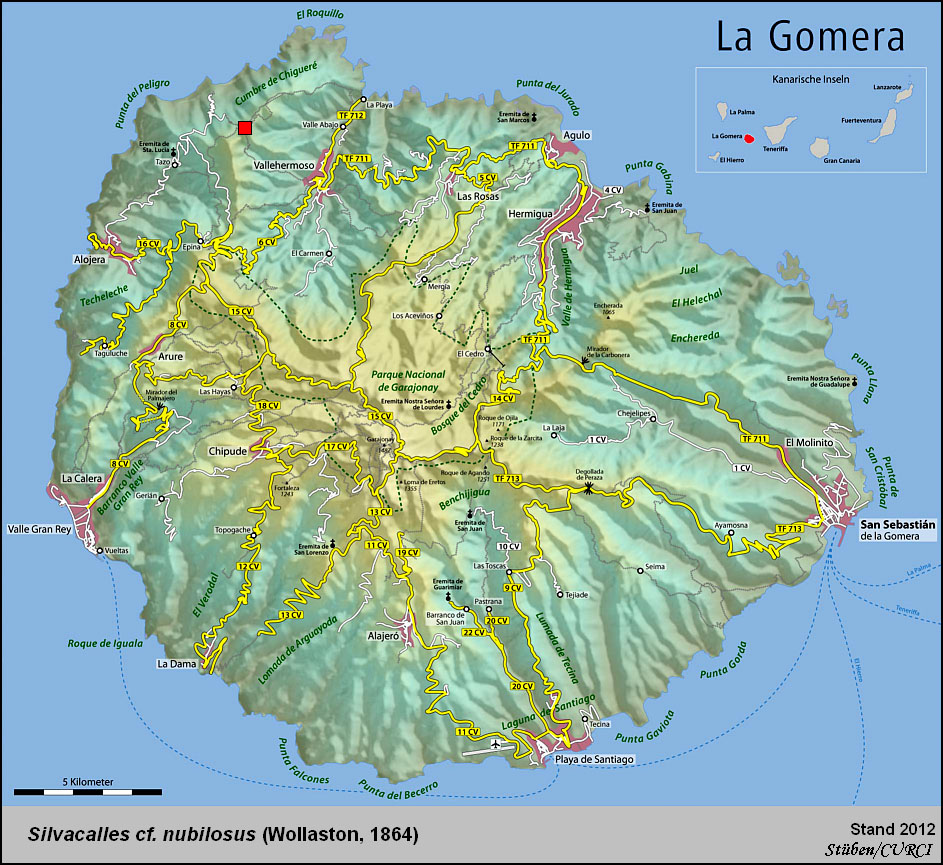
LA GOMERA: [Fig. 77.28]
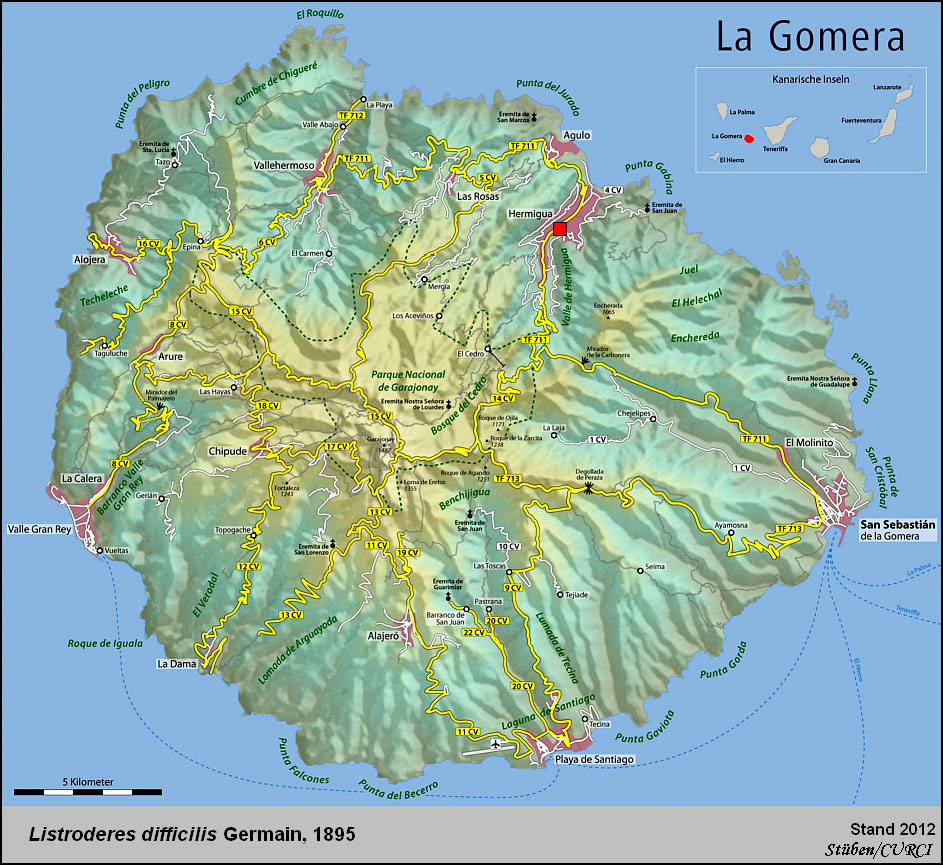
9 Ex.: Hermigua, Chenopodium murale L., 28°10'4"N 17°11'36"W, 86 m, 9.3.2012, leg. Sprick, Stüben, Bayer
HABITAT: [Fig. 77.29]
Comment: Morrone reports this species from the following regions: Argentina, Australia (introduced), Chile (introduced), Easter Islands (introduced), Israel (intro-duced), Japan (introduced), New Zealand (introduced), Spain (introduced), Uruguay, and USA (introduced) Host plants according to Morrone: Apium graveolens L. and Daucus carota L. (Apiaceae); Brassica rapa L., B. oleracea L. and Coronopus didymus (L.) Smith (Brassicaceae); Rumex altissimus Wood (Polygonaceae); Nicotiana tabacum L. and Solanum tuberosum L. (Solanaceae); and Stellaria spp. (Caryophyllaceae).
LITERATURE: [Morrone 2011]
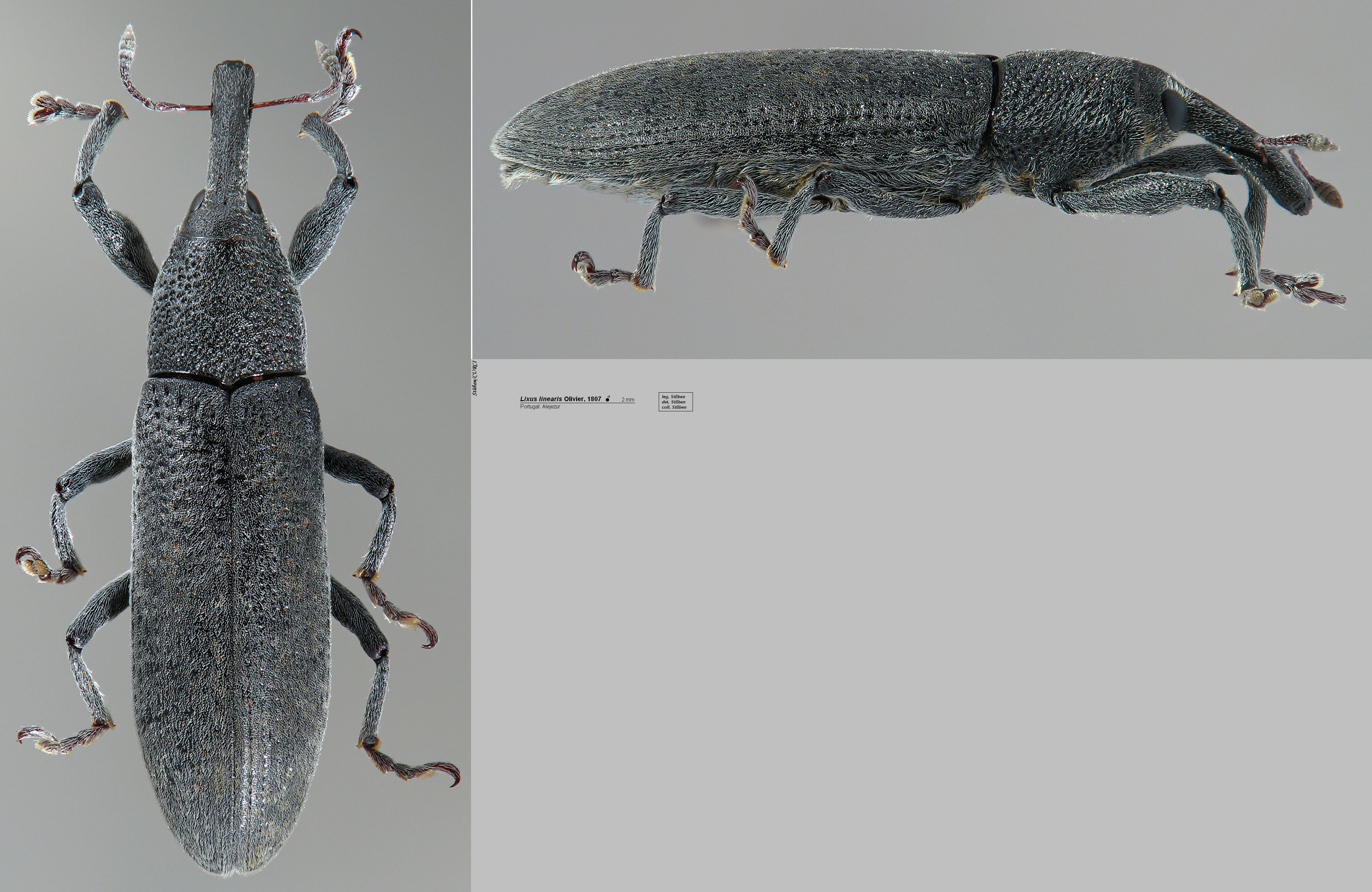
HABITUS: [Fig. 77.30]
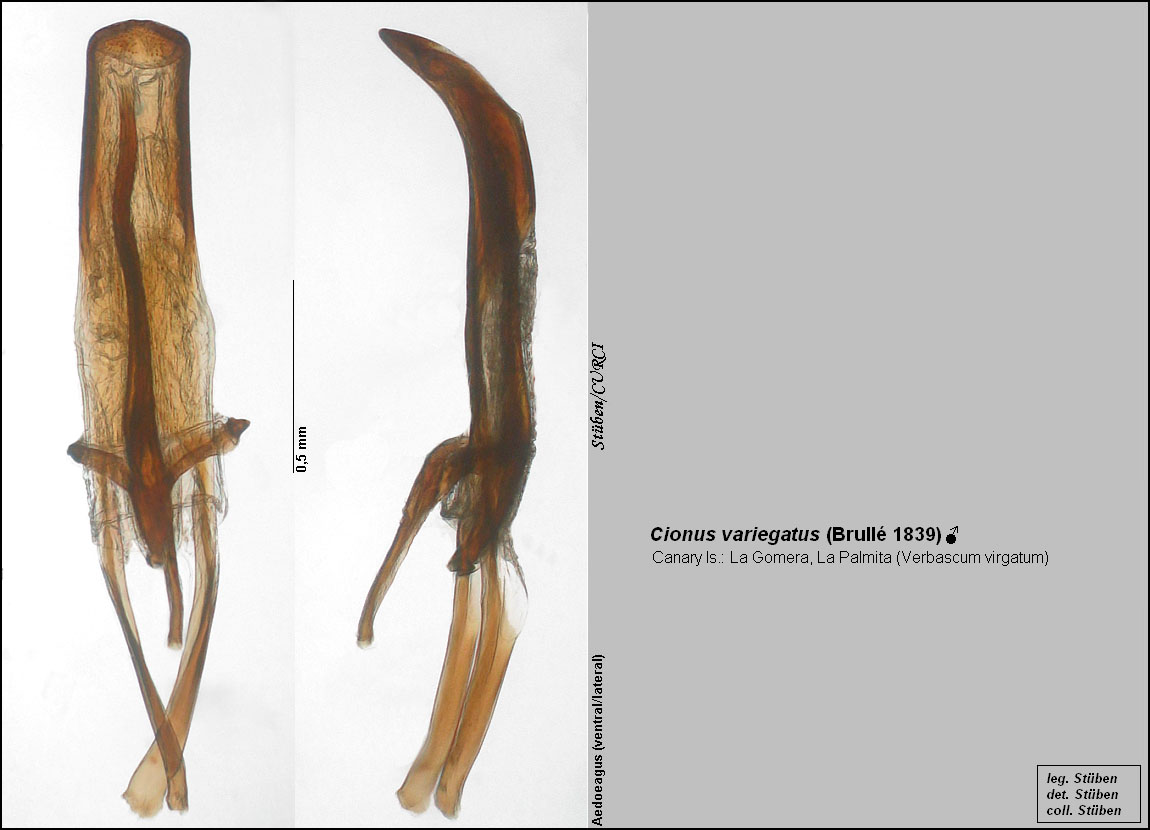
AEDOEAGUS: [Fig. 77.31]
CANARIAN ISLANDS (Lista/2009): La Palma - Tenerife - Fuerteventura - Lanzarote
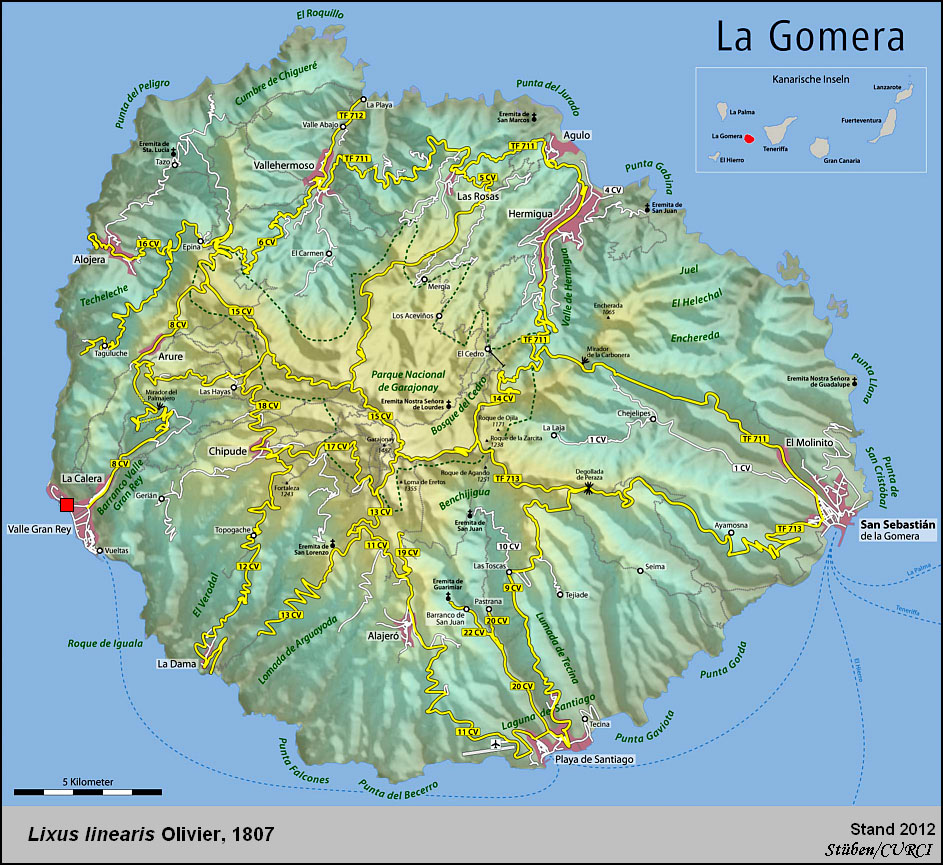
LA GOMERA: [Fig. 77.32]
1 Ex.: Valle Gran Rey, La Calera, 28° 05’41”N 17°20’15”, 26 m, beaten from Chenopodium murale L. together with Lixus brevirostris, 5.3.2012, leg. Krátký
HABITUS: [Fig. 77.33]
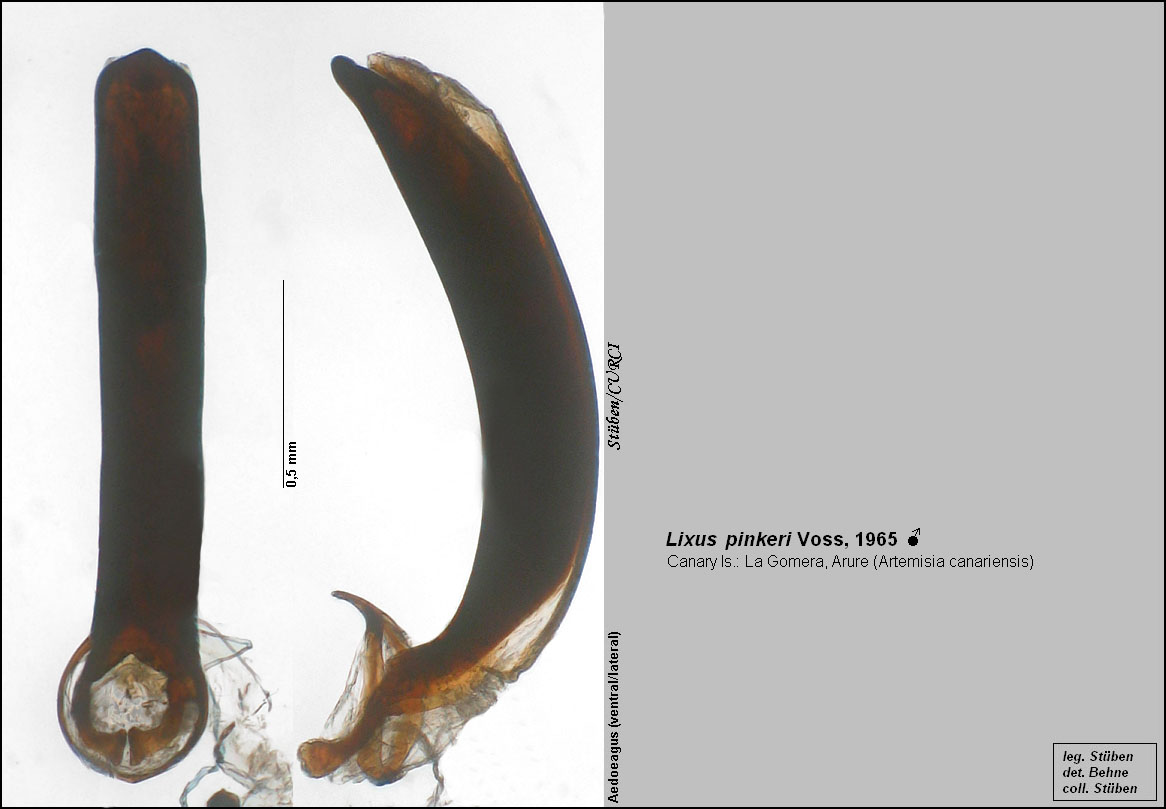
AEDOEAGUS: [Fig. 77.34]
CANARIAN ISLANDS (Lista/2009): El Hierro - La Gomera - Gran Canaria - Fuerteventura
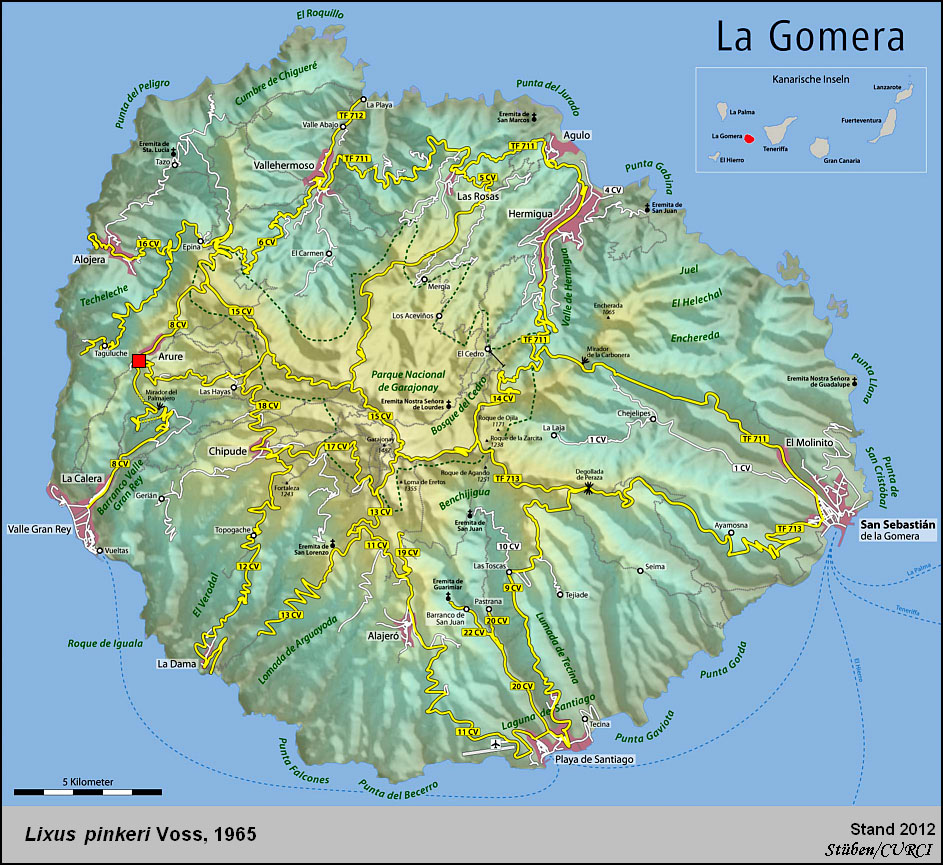
LA GOMERA: [Fig. 77.35]
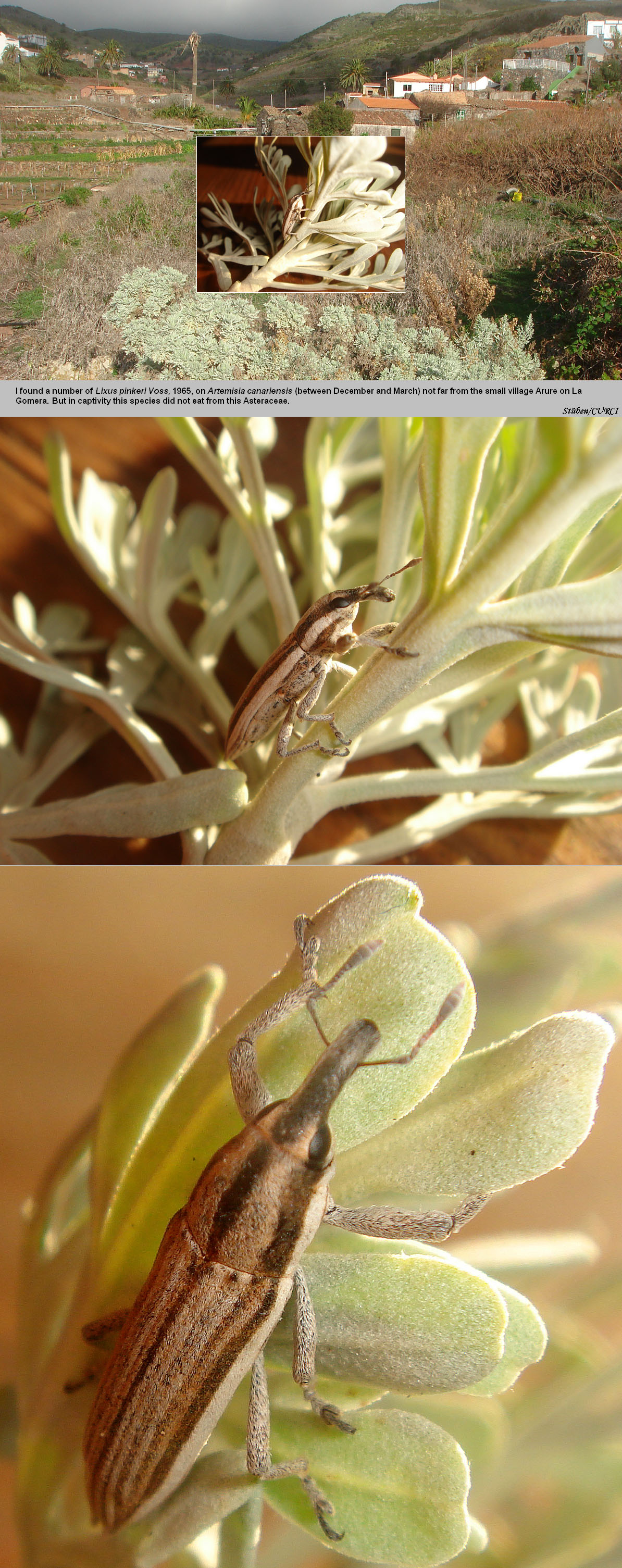
17 Ex.: Arure, Ermita Virgen de La Salud, Artemisia canariensis (= A. thuscula), 28° 7'59"N 17°19'10"W, 817 m, 24.12.2011 & 2.3.2012, leg. Stüben
Comment: In my catalogue of La Gomera [Stüben 2011c] the habitus and aedeagus of Lixus pinkeri were, erroneously, depicted by those of an unknown species from Gran Canaria. This is the result of the comparison with the types of Lixus pinkeri Voss, 1965 (col. „Zoologisches Institut und Zoologisches Museum der Universität Hamburg“). The illustrations here show Lixus pinkeri from La Gomera.
HABITAT: [Fig. 77.36]
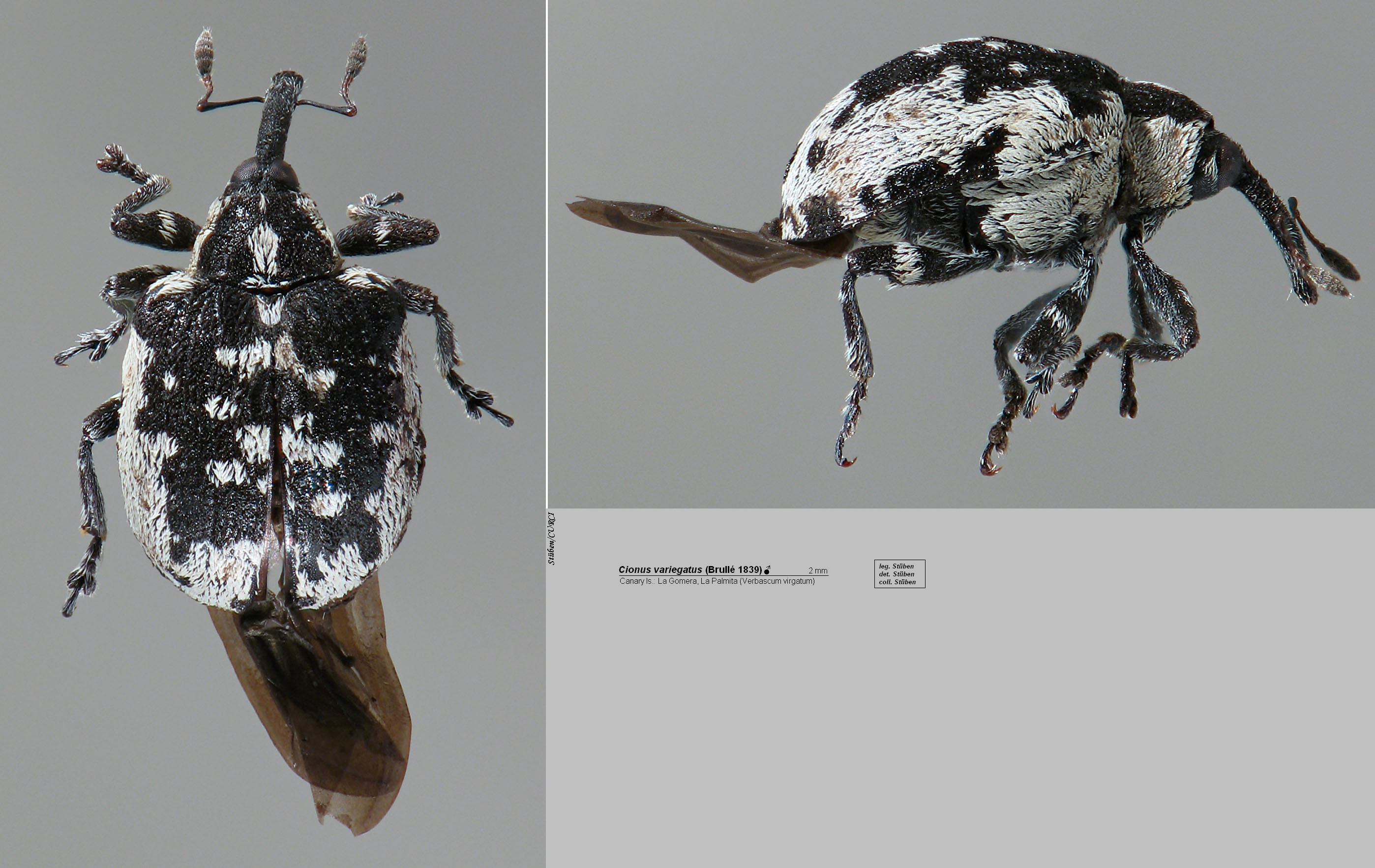
HABITUS: [Fig. 77.37]
AEDOEAGUS: [Fig. 77.38]
CANARIAN ISLANDS (Lista/2009): La Palma - La Gomera - Tenerife
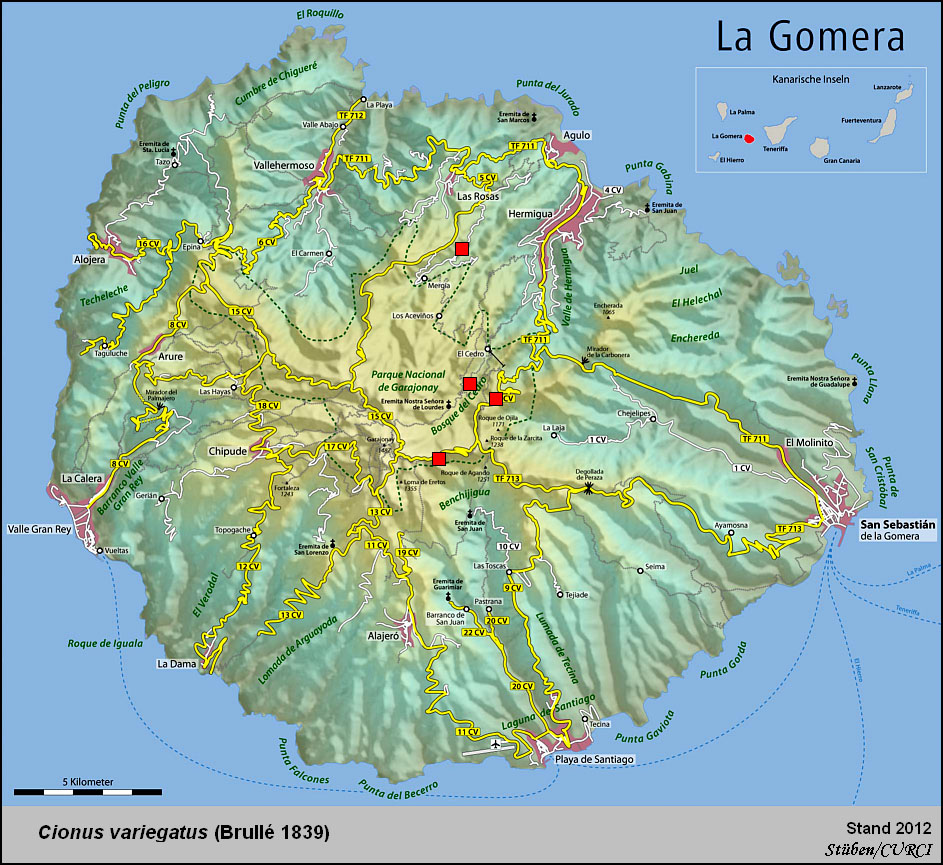
LA GOMERA: [Fig. 77.39]
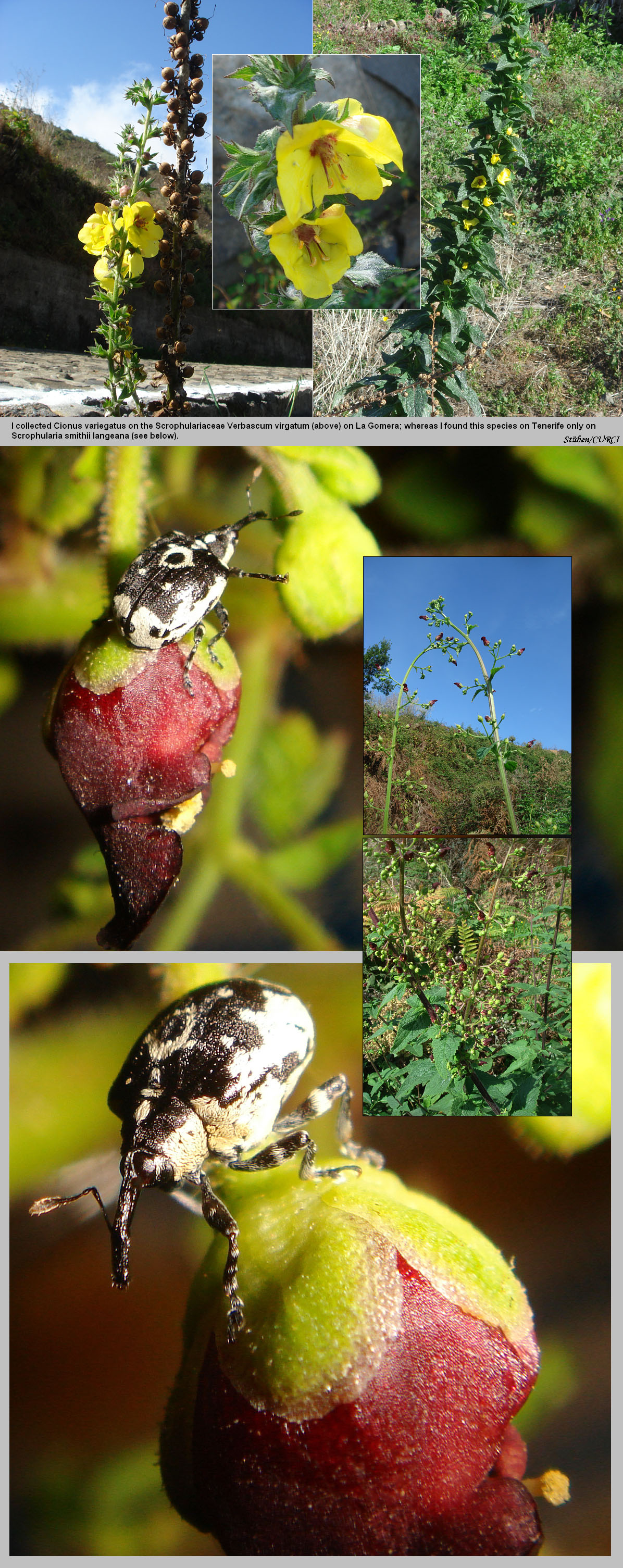
1 Ex.: La Palmita, Verbascum virgatum, 28°10'23"N 17°12'52"W, 643 m, 7.3.2012, leg. Stüben
1 Ex.: Bosque del Cedro, 28R28194 311309, 28°7'31.57"N, 17°13'12.25"W, Scrophularia sp., beaten, 945m, 13.04.1975
3 Ex.: El Bailadero (El Cedro), 28R28282 311291, 28°7'26.25"N, 17°12'39.89"W, Scrophularia sp., beaten, 985m, 03.07.1995, leg. Oromí
1 Ex.: El Cedro (no more precision), Scrophularia sp., 08.04.1967, leg. Palm
3 Ex.: Los Noruegos, 28R28054 311106, 28°6'24.82"N, 17°14'2.16"W, Scrophularia sp., beaten, 15.02.2003, leg. Oromí
Comment: In my catalogue of La Gomera [Stüben 2011c] the habitus and aedeagus of Cionus variegatus (Brullé, 1839) were, erroneously, depicted by those of Cionus griseus Lindberg, 1958, an endemic species of Tenerife. The illustrations should be replaced by those provided above.
HABITAT: [Fig. 77.40]
HABITUS: [Fig. 77.41]
AEDOEAGUS: [Fig. 77.42]
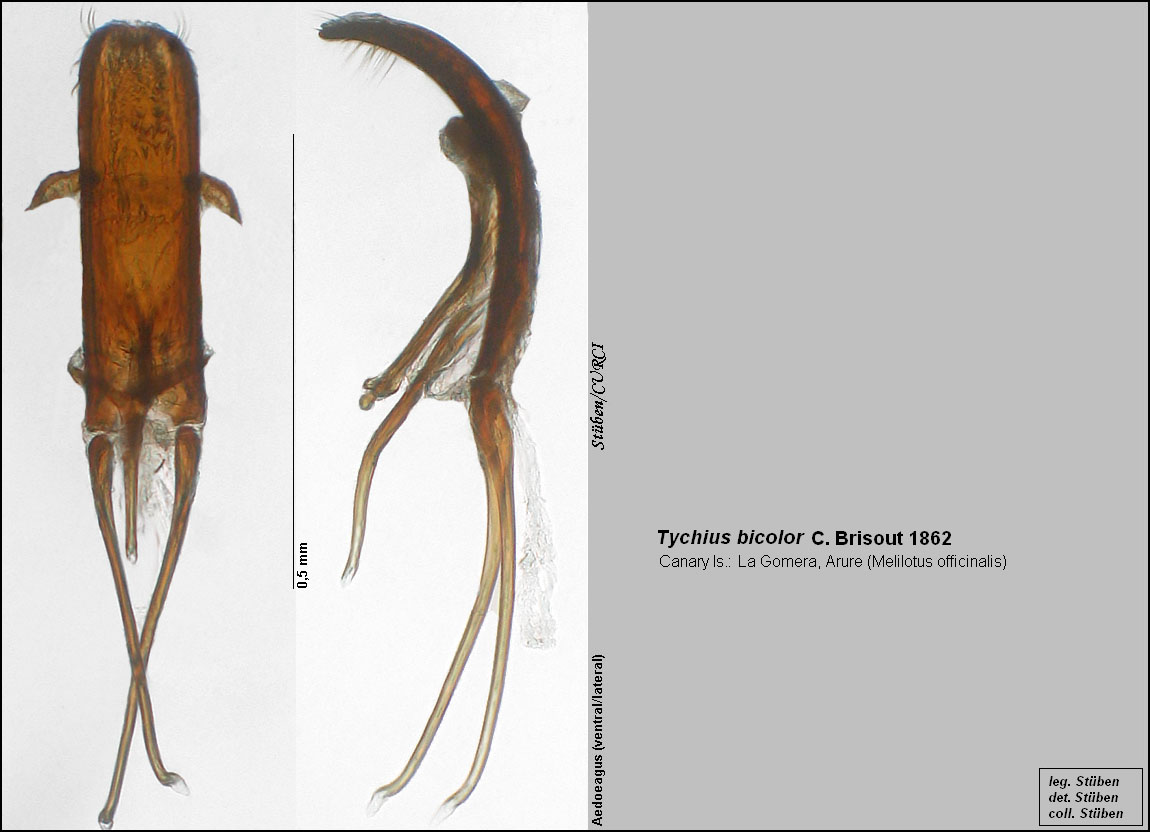
LA GOMERA: [Fig. 77.43]
3 Ex.: Arure, Ermita Virgen de La Salud, Melilotus officinalis , 28° 7'59"N 17°19'10"W, 817 m, 2.3.2012, leg. Stüben
HABITAT: [Fig. 77.44]
HABITUS: [Fig. 77.45]
LA GOMERA: [Fig. 77.46]
1 Ex.: N Epina: Teselinde, Santa Clara, Laurisilva, Silene bourgeaui, 28°11'47"N 17°17'16"W, 748 m, 10.3.2012, leg. Stüben
Comment: The female found on 10.3.2012 probabely represents a new species. Since then another pair was found by me in 2011 in the North of Epina (Teselinde, Santa Clara). It will be described by me in the coming months.
(*) Further records and results of all of our excursions during the meeting on La Gomera, that will be compiled in the weeks and months ahead, will be considered in the planned catalogue of Macaronesia of our Internet journal „Le Charancon“ [Stüben, Behne & Brunner 2013].
As we can see, much remains to be discovered on La Gomera, which is also shown by the numerous first descriptions in the past few years! The presence of the Biological Research Station of the CURCULIO Institute is an important factor (and we are here just at the beginning!) to intensify the study of Gomerian Curculionidae and of the neighbouring islands and to let as many scientists from all over Europe as possible participate.
That is why I now repeat the invitation to scientists and graduate students, to work in our research institution for 3-6 months:
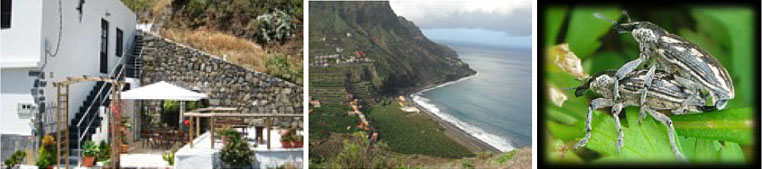
In close co-operation with the "Casa Diversa" on La Gomera / Hermigua (www.casadiversa.com) and museums, universities and research institutions of the Federal Republic of Germany, the CURCULIO Institute (www.curci.de) is seeking (graduate) students, who want to work 3-6 months (or longer) in the Biological Research Station of the CURCI.
Field of activity: Research into the Curculionoidea (Coleoptera) on La Gomera. Population genetic studies, phylogenetic-systematic-taxonomical work and biological-ecological studies are welcome. To enable effective working in the Biological Research Station and to obtain synergies, a close thematic consultation prior to starting is recommended.
The essential collecting and working permits for the whole island of La Gomera (incl. "NP Garajonay") are provided for the co-operators / members of the CURCULIO Institute. Students can make use of a laboratory (e.g., with microscopes, a reference collection of Curculionoidea, PC and Internet). You will find ideal working conditions!
Conditions: High commitment in the field of nature conservation, basic knowledge of Spanish (recommended). It is expected that a report will be given occasionally in the "Casa Diversa" about your own work for interested persons (an interpreter is available) and/or to take interested persons in the field during excursions.
Contact: If you are interested, please contact the head of the Biological Research Station Dr. Peter E. Stüben / CURCULIO Institute: P.Stueben@t-online.de
Do not hesitate - Asking does not cost anything. Many thanks!
Address: CURCULIO-Institute Dr. Peter E. Stüben, Hauweg 62, 41066 Mönchengladbach, Germany, E-Mail: P.Stueben@t-online.de
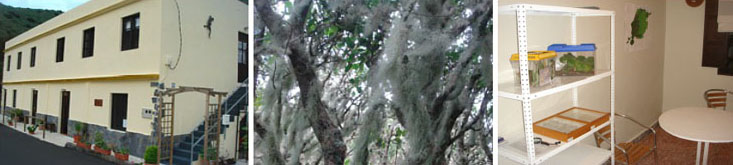
Ursula Baur (Germany), Christoph Bayer (Germany), Lutz Behne (Germany), Norbert Bewernitz (Germany), Johannes Brunner (Germany), Marion Brunner (Germany), Jiri Krátký (Czech Rep.), Manfred Lehmann (Germany), Jean-Michel Lemaire (France), Antonio Machado (Spain: Canary Islands), Raquel Marcos (Spain), Jochen Messutat (Germany), Gerd Müller (Germany), Uschi Müller (Germany), Jean Pelletier (France), Philippe Ponel (France), Peter Sprick (Germany), Robert Stejskal (Czech Rep.), Peter E. Stüben (Germany), Filip Trnka (Czech Rep.), Patrick Weill (France).
Besides the institutions on La Gomera already mentioned, we would like to express our very special thanks to Antonio Machado, who took over the the task of the PR work during the meeting, and Raquel Marcos & Norbert Bewernitz from the Casa Diversa in Hermigua (Las Nuevitas), who as perfect hosts of the Biological Research Station of the CURCULIO Institute ensured smooth operation during the events. I would like to thank also the many Spanish and German friends in Hermigua and Peter Sprick for the translation of the text. Adrian Fowles kindly revided the English text.
Morrone, J.J. (2011): Annotated checklist of the tribe Listroderini (Coleoptera: Curculionidae: Cyclominae). - Zootaxa 3119: 1-68.
Stüben, P.E. (2011a): Discurso de inauguración de la 1ª Estación Biológica del Instituto CURCULIO en la Gomera, el 18-12-2010. (Coleoptera: Curculionoidea) - German/Spanish. - Weevil News: http://www.curci.de, 61: 4 pp., CURCULIO-Institute: Mönchengladbach.
Stüben, P.E. (2011b): Eröffnungsrede der 1. Biologischen Station des CURCULIO-Instituts auf La Gomera am 18.12.2010. (Coleoptera: Curculionoidea). - German. - Weevil News: http://www.curci.de, 62: 4 pp., CURCULIO-Institute: Mönchengladbach.
Stüben, P.E. (2011c): Die Curculionoidea (Coleoptera) La Gomeras - SNUDEBILLER 12, Studies on taxonomy, biology and ecology of Curculionoidea, Mönchengladbach: CURCULIO-Institute: 85-129.
Stüben, P.E. / Behne, L. / Floren, A. / Günther, H. / Klopfstein, S. / López, H. / Machado, A. / Schwarz, M. / Wägele, J.W. / Wunderlich, J. & Astrin, J.J. (2010): Canopy Fogging in the Canarian laurel forest of Tenerife and La Gomera. - WEEVIL NEWS: http://www.curci.de/Inhalt & WEEVIL NEWS (printable version) 51 (1. May 2010): 21 pp., CURCULIO-Institute: Mönchengladbach.
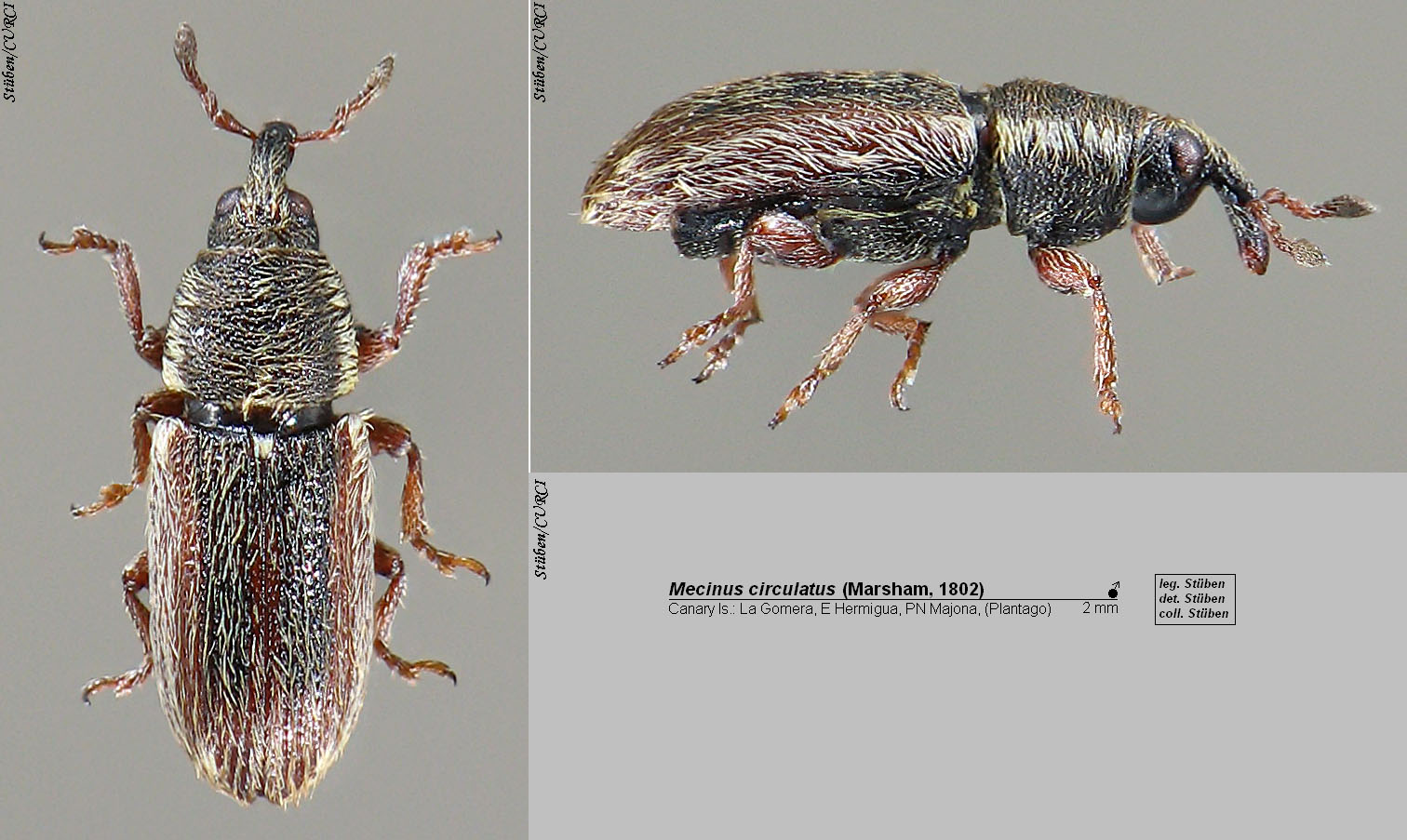
HABITUS: [Fig. MECcir.1]
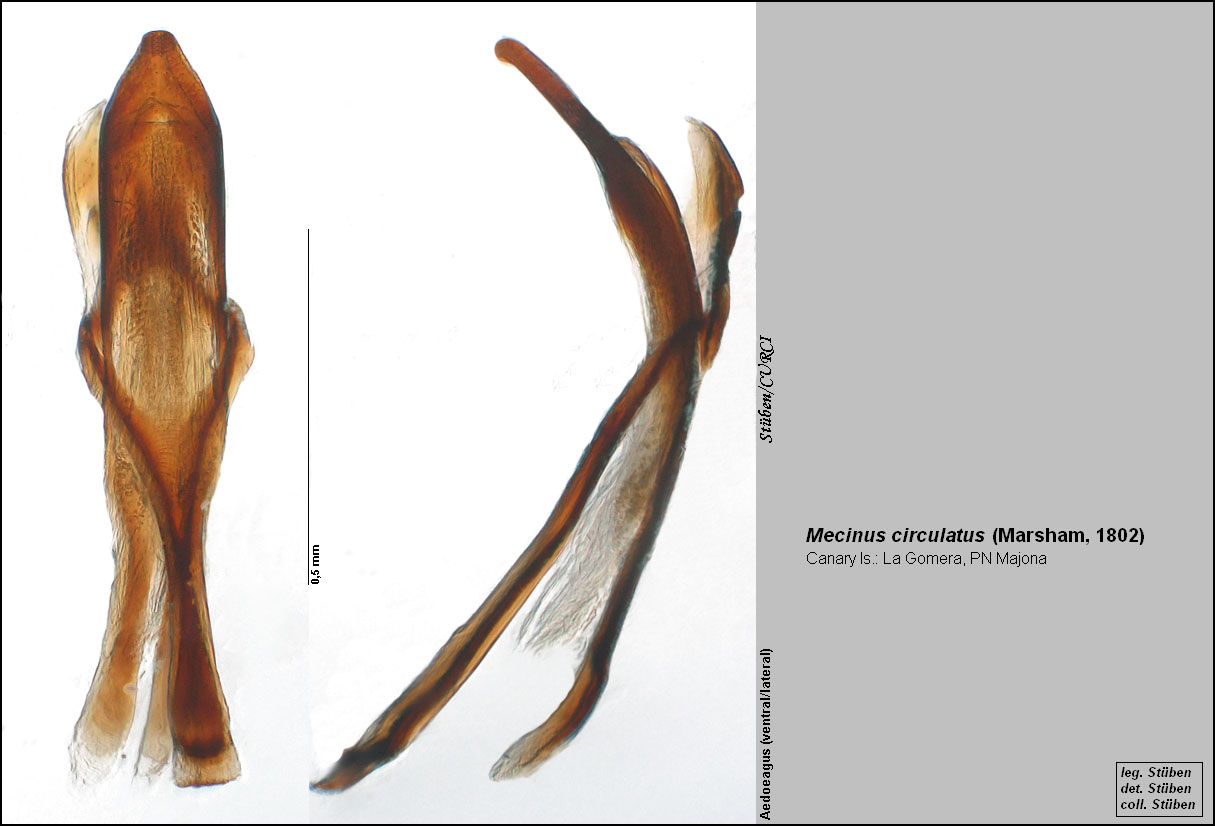
AEDOEAGUS: [Fig. MECcir.2]
CANARIAN ISLANDS (Lista/2009): Tenerife
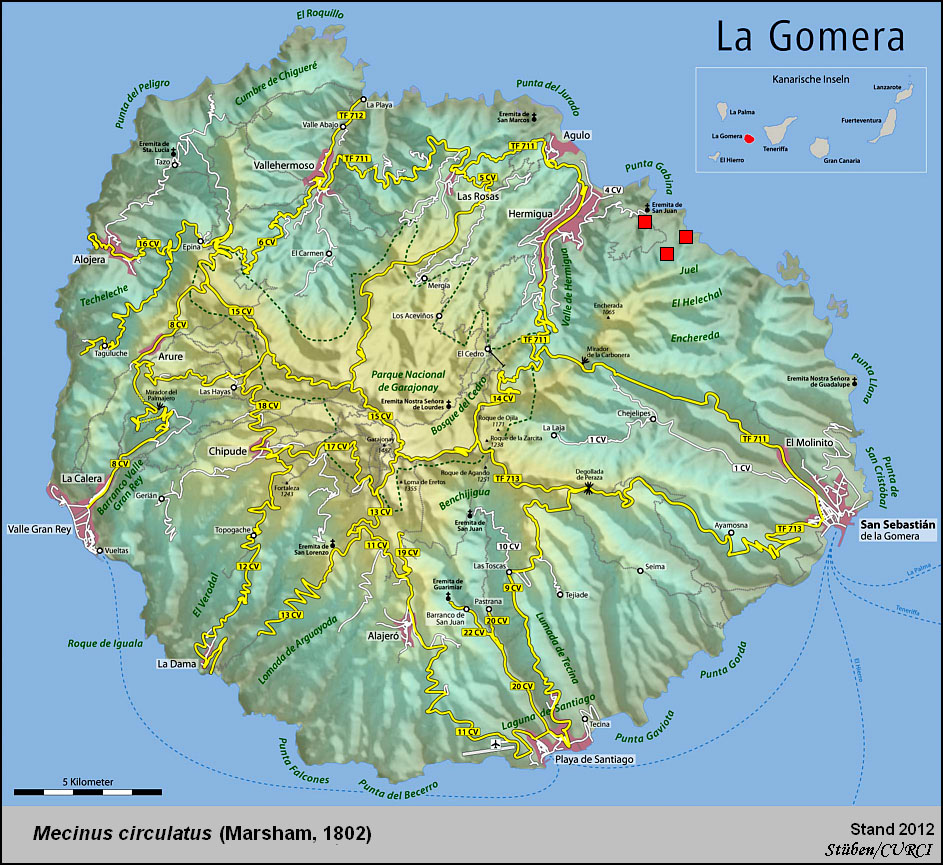
LA GOMERA: [Fig. MECcir.Map]
2 Ex.: E Hermigua, PN Majona: near Casas del Palmar, 28°9'44"N, 17°10'00"W, Plantago, beaten, 321m, 06.02.2011, leg. Stüben
7 Ex.: La Caleta - Punta San Lorenzo, 28°10'15"N, 17°9'38"W, Plantago, beaten, 41m, 25.02.2011, leg. Stüben
1 Ex.: E Hermigua, PN Majona: El Palmar - Taguluche, Sukkulentenbusch, Plantago, 28°9'45"N 17°10'01"W, 322 m, 31.12.2011, leg. Stüben
2. Erroneously, in the catalogue of La Gomera (SN12/2011: 113) the habitus and aedeagus of Cionus variegatus (Brullé, 1839) were not depicted, but instead those of the monochrome yellow-scaled species Cionus griseus Lindberg, 1958, an endemic species of Tenerife, were shown. The illustrations should be replaced by the illustrations provided above under Cionus variegatus.
3. In my catalogue of La Gomera [Stüben 2011c: 125] the habitus and aedeagus of Lixus pinkeri were depicted by those of an unknown species from Gran Canaria. This is the result of the comparison with the syntypes of Lixus pinkeri Voss, 1965 (col. „Zoologisches Institut und Zoologisches Museum der Universität Hamburg“).
The very nice poster to the Meeting with all 125 species (current status: August 2012) is available for 79,- Euro (incl. postage) from the CURCULIO Institute. Printed and delivered from the date of receipt of the order from the beginning of 2013!











[TV Canarias]